
Skip to main contentSkip to footer
  • (770) 578-0598
  • Visit Our Showroom
  • Contact Us
  • Toggle Toolbar Search Menu
  • Toggle My Account Menu
    Login
    Forgot Password?

    Don’t have an account? Sign up now

  • Toggle My Wish List
  • Toggle Search Menu
  • Toggle My Wishlist
  • Toggle Shopping Cart Menu
David Douglas Diamonds & Jewelry logo
  • Dave Douglas Jewelry Logo
  • Engagement
    Engagement Rings
    Customizable Engagement RingsSemi-Set Engagement Rings
    Pre-set Engagement Rings
    Diamond Engagement RingsLab Diamond Engagement RingsShop all Pre-Set Engagement Rings
    Shop By Style
    SolitaireClassicUnique HaloThree StoneVintage
    Shop By Shape
    RoundOvalEmeraldPearCushionMarquise
    Featured
    Hidden Halo Engagement RingsGabriel & Co
    Education
    Engagement Ring BenefitsJewelry FinancingLifetime WarrantyDesign Concierge
    Browse All Engagement
  • Wedding
    Women
    Classic BandsModern BandsAnniversary BandsCurved BandsLuxe Bands
    Men
    Classic BandsModern Metal BandsMixed Metal BandsPattern BandsStones & Inlays
    Men's By Metal
    PlatinumYellow GoldWhite GoldRose Gold
    Modern Metals
    Damascus SteelMeteoriteTantalumZirconium
    Designers
    Chris Ploof DesignsAmmara StoneHeavy Stone Rings
    Wedding Day Jewelry
    Diamond StudsDiamond PendantsTennis Bracelets
    Build Your Wedding Band
    Menu image
  • Diamonds
    Natural Diamonds
    RoundPrincessEmeraldAsscherRadiantCushionOvalPearMarquiseHeart
    Canadamark Diamonds
    Specialty Diamonds
    Lab-Grown Diamonds
    Search Lab Diamonds8x Lab DiamondsSustainably Rated Lab Diamonds
    Featured
    Salt & Pepper DiamondsPre-Set Engagement Rings
    Education
    Diamond FinancingLifetime Diamond UpgradeAbout Lab Grown Diamonds
    Shop Loose Diamonds
  • Custom
    DESIGN YOUR OWN
    Custom Design JewelryWhat to ExpectClient Stories
    CUSTOM JEWELRY
    Custom Design GalleryAward Winning DesignsOur DesignersOur Process
    ONE OF A KIND
    Handmade JewelryHand Engraved JewelryVisit Us In Marietta
    Menu image
  • Jewelry
    SEARCH JEWELRY
    RingsEarringsNecklacesBraceletsWatchesShop All Jewelry
    SHOP BY STYLE
    Diamond Stud EarringsCocktail RingsTennis BraceletsHoop EarringsMen’s JewelryEstate Jewelry
    SERVICES
    Jewelry RepairCustom JewelrySell Your JewelryAppraisalsEar PiercingView All Services
    FEATURED
    Gabriel & Co. FashionShinola WatchesHandmade JewelryreDesign Your RingDavid Douglas Rewards
    Menu image
  • About
    ABOUT US
    Our StoryResponsible SourcingIn Our CommunityAward Winning
    SERVICES
    Jewelry RepairCustom JewelrySell Your JewelryAppraisalsEar PiercingView All Services
    STAY CONNECTED
    Contact UsDavid Douglas Blog
    STAY SOCIAL
    InstagramFacebook
    QUICK LINKS
    Return PolicyEngagement Ring BenefitsLifetime WarrantyJewelry FinancingDavid Douglas Rewards
    Menu image
  • (770) 578-0598
  • Visit Our Showroom
  • Contact Us
  • Toggle Toolbar Search Menu
  • Toggle My Account Menu
    Login
    Forgot Password?

    Don’t have an account? Sign up now

  • Toggle My Wish List
David Douglas Diamonds & Jewelry logo
Log In My Cart
  1. Home
  2. Blog
  3. Here's How GE's 'Project Superpressure' Produced the First Lab-Grown Diamond

Here's How GE's 'Project Superpressure' Produced the First Lab-Grown Diamond

Published: Nov 30
Here's How GE's 'Project Superpressure' Produced the First Lab-Grown Diamond
Author: 
Howard Cohen

Superman fans may remember how the Man of Steel crushed a chunk of coal into a diamond in 1983's Superman III. While the superhero's legendary feats of strength are fanciful, his foray into the world of fine gemstones is not as far-fetched as it seems. You see, coal is made from carbon, and pure carbon — under the right amount of pressure and heat — can be transformed into a diamond.
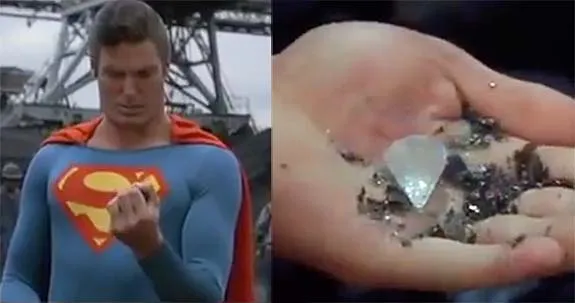
Scientists have long theorized how simple carbon might be turned into the most precious of gems by somehow duplicating in a lab the phenomenon that occurs naturally deep below the earth's surface.

In her new book, Genuine Fakes: How Phony Things Teach Us About Real Stuff, historian Lydia Pyne recounts the experiments that led to the first lab-grown diamond at General Electric's Research Laboratory in Schenectady, NY, in 1954.

Pyne explained how a revolutionary vertical hydraulic piston invented by American Nobel-winning physicist Percy Bridgman in the 1940s allowed for future scientists to generate the pressure necessary to conduct their carbon-to-diamond experiments.
Bridgman's piston — affectionately called "The Bomb" — could produce 4,200 atmospheres of pressure. Legend has it that the scientist's lab at Harvard had holes in the walls, evidence of the power of the machine and dangerous experiments gone awry.

At General Electric, the super secret effort to create diamonds in a lab was code-named “Project Superpressure.” In early December 1954, scientist Herbert Strong conducted Experiment 151, where he deposited into a pressure cone a carbon and iron mixture, along with two small natural diamonds to seed the crystal growth. Building on Pyne's work, GE developed a cone that delivered 50,000 atmospheres of pressure and generated a temperature of 1250°C (2282°F).

Strong ran the experiment overnight, and the next morning removed the two seed crystals and a blob of the iron-carbon material. Strong instructed GE's metallurgy division to polish the material, but that was an impossible task because it was destroying the polishing wheel. The only element that could defeat the wheel was a diamond.

According to Pyne, X-ray analysis confirmed that Strong's experiment had produced a lab-grown diamond.

About a week later, fellow researcher Howard Tracy Hall performed a similar experiment using a high-pressure press called a belt. Two diamond seed crystals plus carbon and iron sulfide were placed in a graphite heater. This brew was heated to 1600°C (2912°F) under 100,000 atmospheres of pressure. Thirty-eight minutes later, octahedron diamond crystals emerged from the belt.

In the weeks that followed, GE researchers were not able to duplicate the results of Strong's experiment, but were able to replicate Hall's success.

GE published the results of its ground-breaking work in February of 1955, just over 65 years ago.

You may read an excerpt of Pyne's book at Science Friday's website.

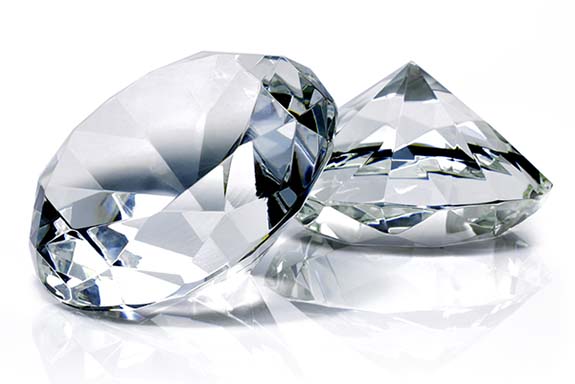
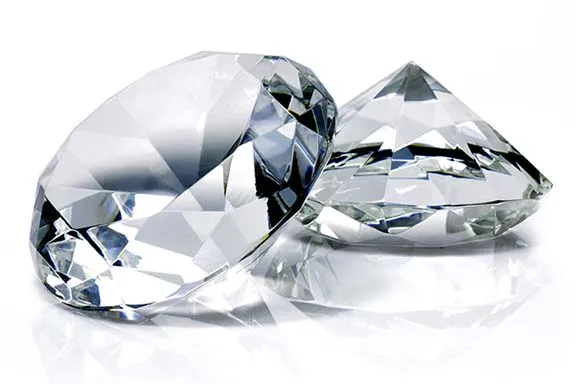
Credits: Screen captures via YouTube.com. Diamond image by Bigstockphoto.com.

Categories
A Century of Luxury & Legacy7
  • Previous Article
  • Next Article
Contact Us
Call Us 770.578.0598
Text Us 770.578.0598
Email Us Here

Visit Us
3605 Sandy Plains Road
Marietta, GA 30066

Tues-Fri: 10am - 6pm
Sat: 10am - 4pm
Sun: CLOSED
Mon: CLOSED

Quick Links
  • My Account
  • Returns
  • Our Services
  • Lifetime Warranty
  • Diamond Upgrade
  • Flexible Financing
  • David Douglas Rewards
Our Services
  • Jewelry Repair
  • Custom Jewelry
  • Sell Your Jewelry
  • Jewelry Appraisals
  • Ear Piercing
  • Permanent Jewelry
Shop Jewelry
  • All Jewelry
  • Rings
  • Earrings
  • Necklaces
  • Bracelets
  • Watches
About Us
  • Our Story
  • Responsible Sourcing
  • In Our Community
  • Our Designers
  • Client Stories
Follow Us
SITE MAP PRIVACY & SECURITY Lifetime Warranty RETURN POLICY

© 2026 David Douglas Diamonds & Jewelry. All Rights Reserved. Website designed, maintained, and hosted by Punchmark

  • Return Policy
  • Privacy Policy
  • Terms & Conditions
  • Accessibility Statement

© 2026 David Douglas Diamonds & Jewelry. All Rights Reserved.

Powered by: Punchmark

My Bag
Shopping cart contents
Loading

Learn how we use cookies in our Privacy Policy or manage cookie preferences.