
Week 5 – A Century of Luxury & Legacy – 2/1/2026
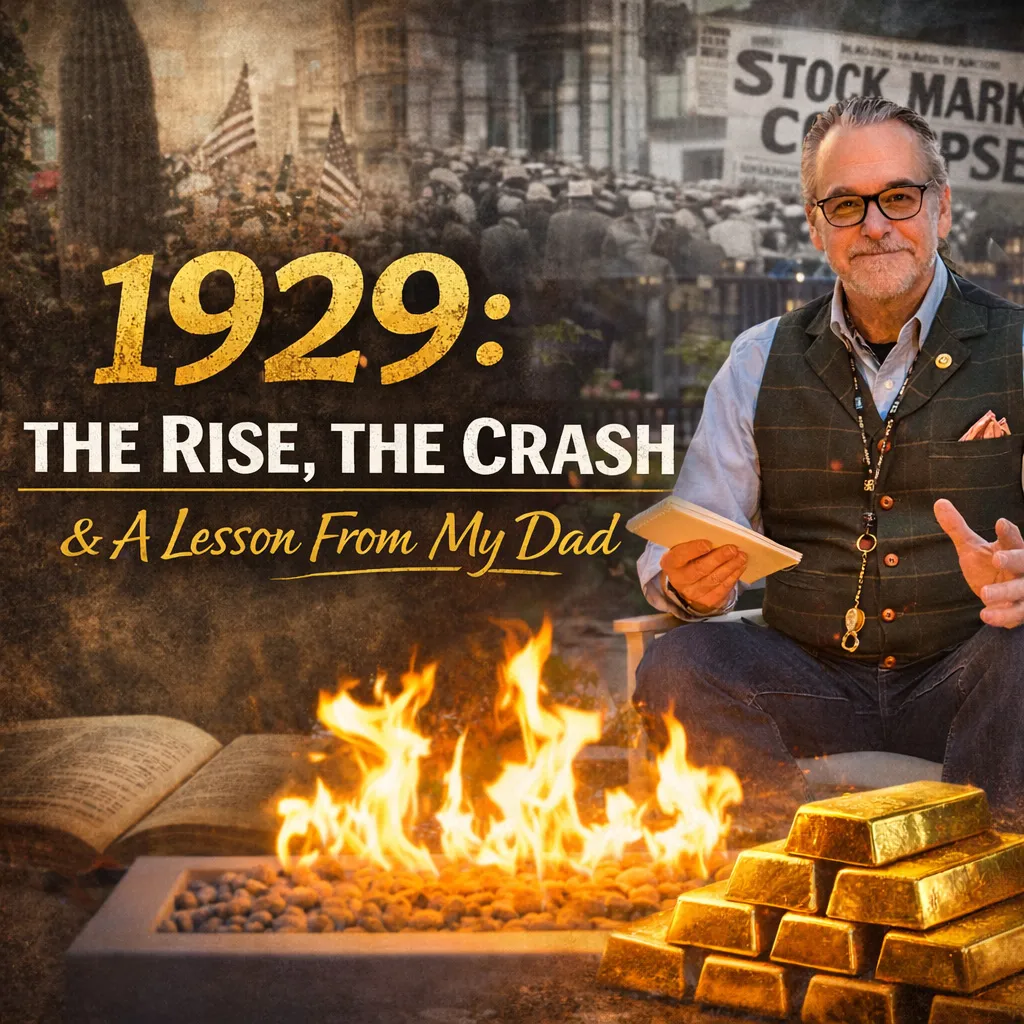
When Confidence Collapses: 1929, Gold, and a Lesson From My Dad
This week I’m writing from Phoenix, Arizona, sitting outside at the Arizona Biltmore during a jewelry show. Back home it’s frigid cold, so I’m not complaining. There’s something about warm air and a quiet morning that makes reflection easier.
And I’m still not quite ready to leave the Roaring Twenties.
There’s just so much there.
The Roaring Twenties weren’t just an economic boom—they were a cultural explosion. World War I had ended in November of 1918. The world exhaled. After years of loss and fear, people were ready to live again. Innovation surged. Skyscrapers climbed higher. Radios filled homes with music and news. Automobiles reshaped cities. Talking pictures lit up theaters.
And somewhere in the middle of all of that, my grandfather was coming of age.
He had been born in England, moved to Ottawa, Canada as a child, worked in a restaurant in Toronto, Canada for a season, and eventually made his way to Detroit. By 1926, at just 22 years old, he started his jewelry business.
The timing could not have looked better.
When Confidence Collapses: 1929, Gold, and a Lesson From My Dad
This week I’m writing from Phoenix, Arizona, sitting outside at the Arizona Biltmore during a jewelry show. Back home it’s frigid cold, so I’m not complaining. There’s something about warm air and a quiet morning that makes reflection easier.
And I’m still not quite ready to leave the Roaring Twenties.
There’s just so much there.
The Roaring Twenties weren’t just an economic boom—they were a cultural explosion. World War I had ended in November of 1918. The world exhaled. After years of loss and fear, people were ready to live again. Innovation surged. Skyscrapers climbed higher. Radios filled homes with music and news. Automobiles reshaped cities. Talking pictures lit up theaters.
And somewhere in the middle of all of that, my grandfather was coming of age.
He had been born in England, moved to Ottawa, Canada as a child, worked in a restaurant in Toronto, Canada for a season, and eventually made his way to Detroit. By 1926, at just 22 years old, he started his jewelry business.
The timing could not have looked better.
The Power of Optimism
One of the figures who embodied that era was Charles E. Mitchell, president of National City Bank. They called him “Sunshine Charlie.” He was an optimist—deeply so.
At the time, stock market investing was mostly reserved for the wealthy elite. Mitchell wanted to make it accessible to everyday Americans. Through margin lending—allowing people to put 10% down and borrow the rest—he helped fuel an explosion in stock ownership. Shares owned by the public jumped from around 500,000 to nearly 10 million.
And for a while, it worked.
People were getting rich. The market seemed unstoppable. A small rise in stock prices could double someone’s investment when they were borrowing heavily. Confidence wasn’t just present—it was contagious.
But payday always comes someday.
1929: When It All Fell Apart
As 1929 unfolded, nervousness began creeping in. Investors started selling. Mitchell stepped in, injecting large sums of money to try to stabilize the market. He believed confidence could hold the system together.
But confidence alone cannot support a structure stretched too far.
In a matter of days, $14 billion evaporated. Homes were lost. Jobs disappeared. Businesses collapsed. The optimism of the Roaring Twenties turned into one of the darkest chapters in American economic history.
I often try to imagine what that must have felt like for my grandfather. He had just started his business in 1926. He had moved into bigger spaces. Opportunity was everywhere. And then suddenly, the ground shifted.
The closest I’ve felt to that in my own lifetime was 2008. By mid-year, we were on track to have our best year ever—and then it just fell out from under us. It took time. It took humility. It took faith.
History has a way of repeating themes.
Gold, Markets, and Perspective
Today we see gold, silver, and platinum hitting all-time highs. Then they fall. Then they rise again. Everyone tries to predict the metals market. And often, they blame it on what’s happening in the United States.
But these metals trade worldwide, nearly 24 hours a day. No one nation controls them. Markets move. Prices fluctuate. Predictions fail.
That brings me to a memory from my early days in the business.
When I worked in my dad’s shop, there was a refiner named Vic Galatian who would come by every month. He supplied sizing stock, gold wire, casting grain—whatever we needed. When we had scrap to refine, Vic handled that too. He was a character. Always smoking a cigar. Fingers yellow from working with acids. But he knew his business.
One day I asked him, “Vic, do you try to buy low and sell high?”
He said, “No. I buy every day. I just try to keep it even.”
That stuck with me.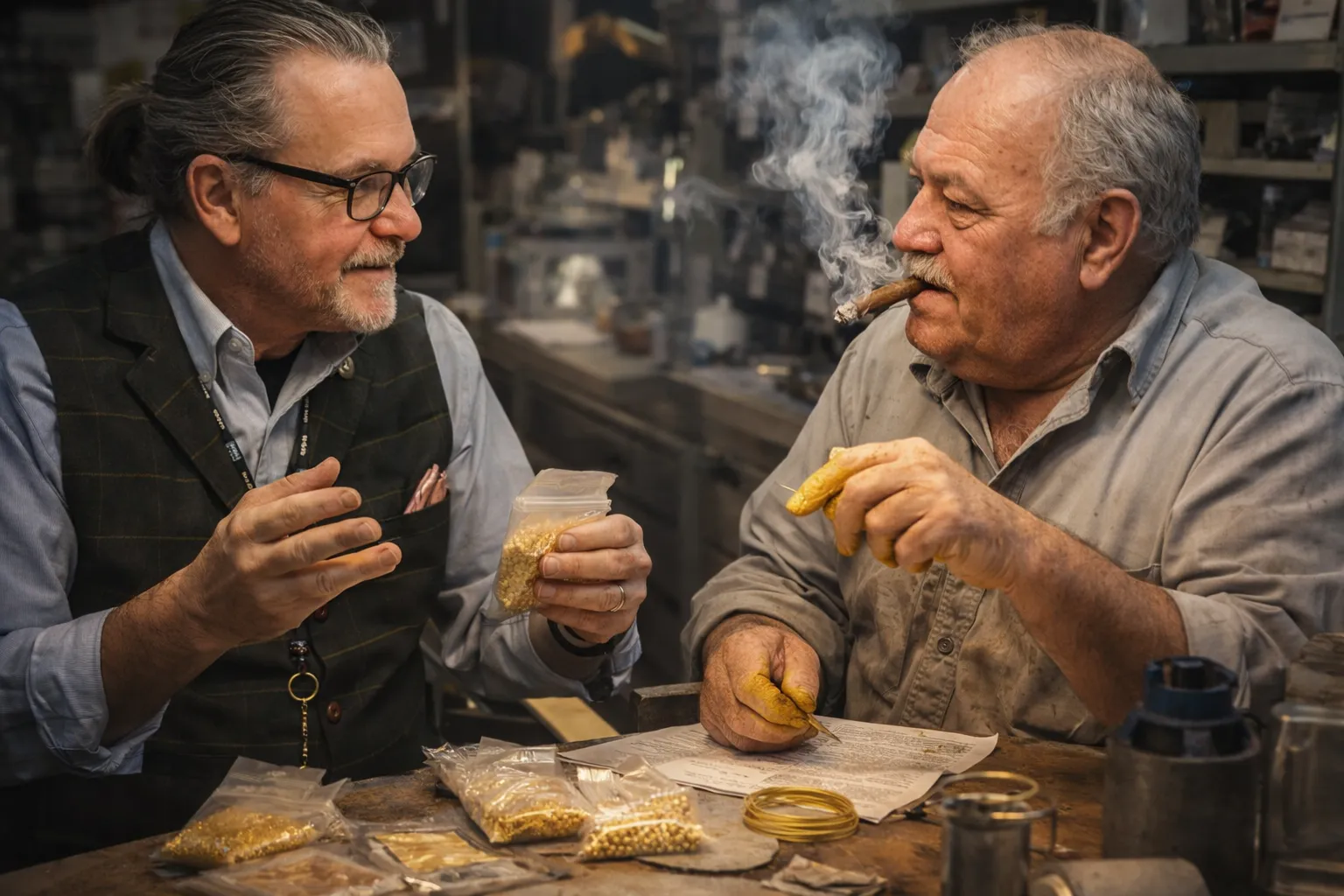
Early in my own career, I adopted that idea. I started buying small amounts of gold every week and saving it. I was proud of my strategy. It felt smart. Disciplined. Strategic.
Then came a conversation with my dad.
“Why Are You Saving Asphalt?”
Every fall for a several years, my brothers and I would take our dad up to North Georgia for a few days. We’d rent a cabin and just spend time together. It was special.
One night I was talking about my gold strategy—saving up gold week after week. I was probably bragging a little.
My dad looked at me and said, “Son, why are you saving asphalt?”
I was confused.
He smiled and said, “The Bible says the streets of heaven are paved with gold.”
Revelation 21:21 says, “The great street of the city was of gold, as pure as transparent glass.”
In God’s economy, gold is pavement.
That perspective changed something in me.
It didn’t mean gold was useless. It didn’t mean markets didn’t matter. But it reminded me that what we often elevate to ultimate value may not be ultimate at all.
What Really Lasts
History teaches us that confidence can collapse overnight. Markets rise and fall. Metals surge and retreat. Systems stretch and sometimes break.
But legacy is built on something deeper.
Faith.
Stewardship.
Relationships.
Wisdom passed from one generation to the next.
My grandfather built through the Roaring Twenties. He endured the crash. My dad passed along perspective. And I’m still learning.
Gold may hold value for a season.
But it was never meant to be the treasure.