
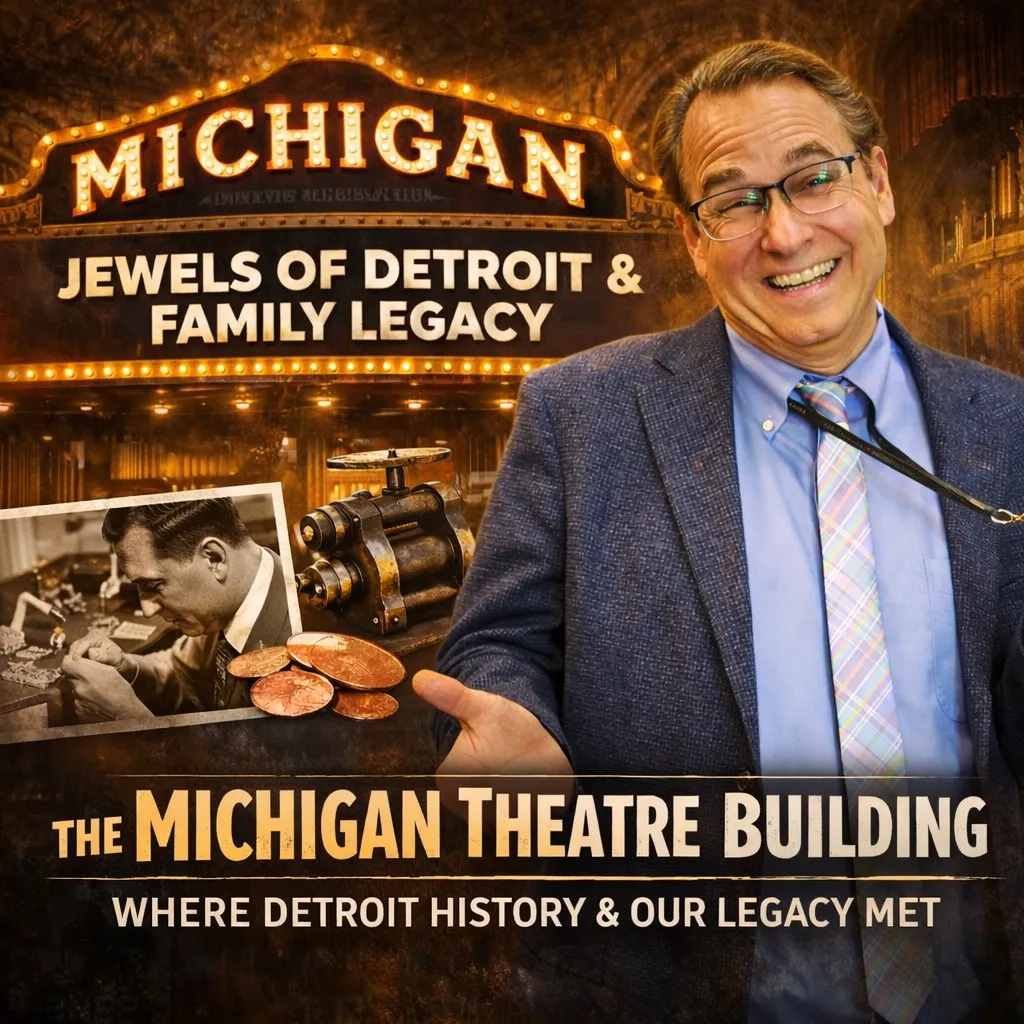
Week 4 1/25/2026
The Michigan Theatre Building
Where Detroit History & Our Legacy Met
In 1926, Detroit was alive.
New buildings were rising. Industry was booming. Innovation was everywhere. And just down the street from where my grandfather first set up shop in the Metropolitan Building, something grand was opening its doors—the Michigan Theatre Building.
This is Week 4 of our journey through A Century of Luxury & Legacy, and today I want to slow down and reflect on that building… and what it meant then—and still means now.
A City in Motion
The Michigan Theatre opened in 1926 on historic ground—the very spot where Henry Ford built his first quadricycle. Think about that for a moment. The birthplace of the automobile revolution became home to a 4,000-seat theatre that symbolized culture, progress, and possibility.
When it opened, it wasn’t just a movie house. It featured five shows daily starting at 10:30 in the morning. There were orchestras, live stage performances, singers, dancers, and silent films accompanied by a massive pipe organ that rose from beneath the stage.
Later, legends like the Marx Brothers, Frank Sinatra, Louis Armstrong, Glenn Miller, and Doris Day would grace that stage. In the 1970s, it transformed again—hosting rock bands like David Bowie, KISS, Aerosmith, Rush, and Bob Seger.
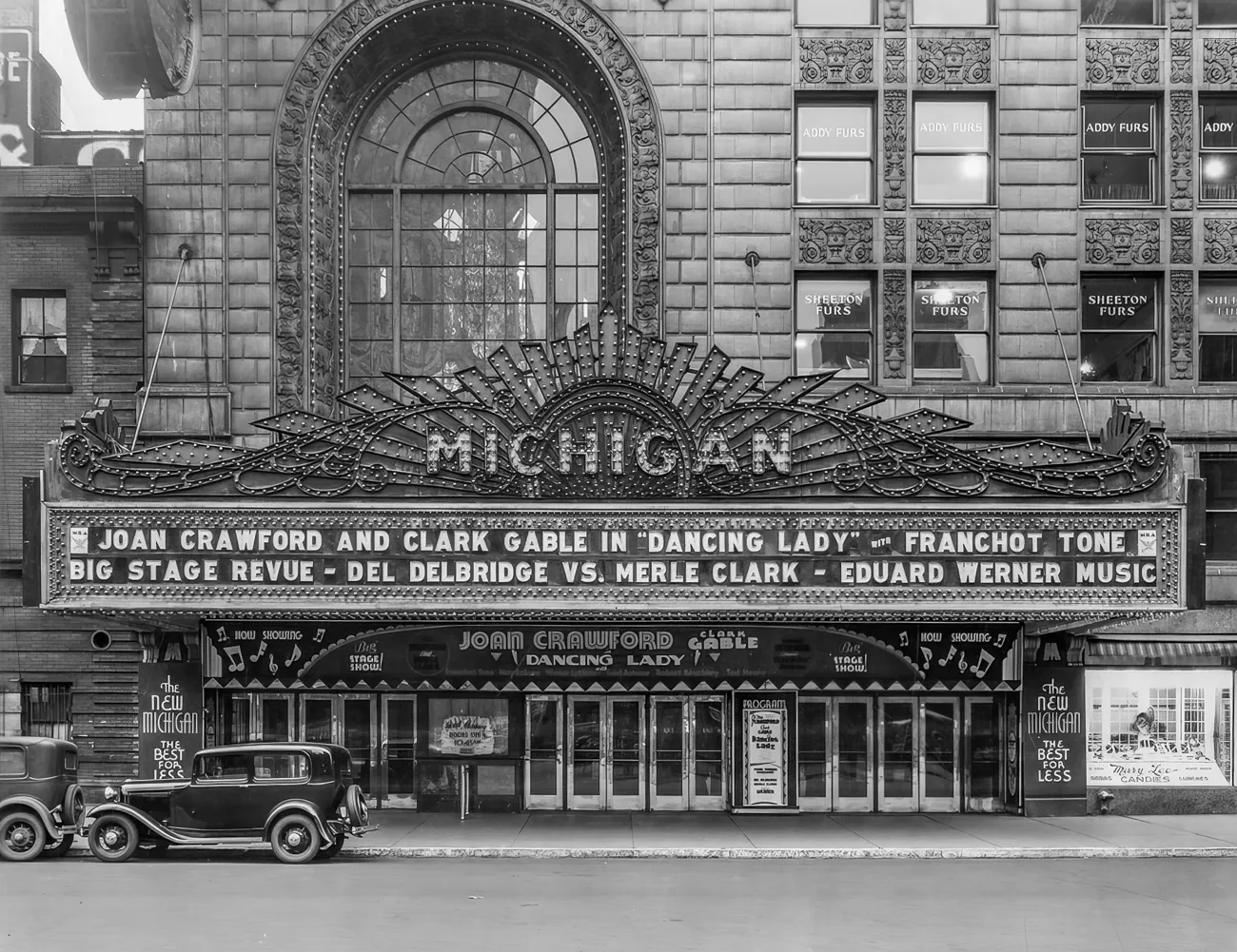
The building evolved with the times.
And so did we.
A Ten-Minute Walk That Changed Everything
My grandfather started in the Metropolitan Building in 1926, but not long after, he moved into the Michigan Building—just a short walk away.
I often wonder what he saw.
Was it the newness? The momentum? The energy? Business people love to say “location, location, location,” and maybe that was part of it. But I suspect it was more than that.
I think he recognized opportunity.
Change was happening in Detroit. Industry was shifting. The world was modernizing. And instead of staying where he was comfortable, he moved toward the future.
That decision—one small relocation—became part of the foundation of our family’s story.
The Smell of Rouge
When I was a little boy, my dad and uncle were on the 10th floor of that Michigan Building. My grandfather had already moved to Florida, but the business continued there.
We used to beg my dad to take us to work with him.
Back then, it felt like a playground. We’d roam the halls, ride the elevator with the operator who would close the gate and ask, “What floor?” The doors would open on the 10th floor, and immediately you’d smell three things:
Rouge.
Cigar smoke.
Whiskey.

Rouge is the red polishing compound jewelers use for the final shine. When those polishing wheels spin, that fine red dust settles everywhere. And once you grow up around it, you never forget the smell.
Even today, if I walk into a workshop and catch that scent, I know instantly—there’s a jeweler nearby.
Some of my favorite memories were simple ones. We’d ask for a penny and run it through the rolling mill until it stretched paper thin. It felt like magic—stretching money longer than it was ever meant to go.
Looking back, that building wasn’t just brick and mortar. It was part of my childhood. It was where legacy felt alive.
From Buggy Whips to Opportunity
Standing on that historic ground—where Henry Ford once tinkered with a quadricycle—it’s impossible not to think about change.
In the early 1900s, there were over 1,300 buggy whip makers. When automobiles emerged, most of them believed cars were just a fad. Around 1,200 stayed exactly where they were.
But about 100 adapted.
They realized they weren’t in the buggy whip business—they were in the leather business. So they began making steering wheel covers, leather seats, dashboards—whatever the new automobile industry needed.
They shifted with the times.
And they survived.
That lesson still speaks loudly today.
Every generation faces change. Every business faces disruption. Every industry evolves.
The question isn’t whether change will come.
The question is: will we recognize opportunity when it does?
Legacy Is Built on Movement
The Michigan Theatre no longer operates the way it once did. It went through seasons of decline and reinvention. What was once a grand theatre eventually became something entirely different.
But the building still stands.
And so do we.
Our family’s jewelry business has moved locations. It has adapted. It has evolved. It has faced challenges and embraced opportunity. If my grandfather hadn’t been willing to move… to shift… to recognize something new… we might not be here today.
That’s the beauty of legacy.
Legacy isn’t built by standing still.
It’s built by faithful movement.
By adapting without losing identity.
By honoring the past while stepping into the future.
And as I reflect on that 10th floor in Detroit… the smell of rouge… the rolling mill… the view of the Ambassador Bridge out the window… I’m reminded that sometimes the smallest decisions—a ten-minute walk down the street—can shape generations.
Here’s to recognizing opportunity.
Here’s to honoring where we came from.
And here’s to continuing the journey.
— Doug Meadows
Founder, Visionary & Hero Maker
David Douglas Diamonds
Credits: The magnificent marquee of the Michigan. Photo from the Burton Historical Collection, Detroit Public Library - Retouching by Helmut Ziewers
The Michigan Theatre Building
Where Detroit History & Our Legacy Met
In 1926, Detroit was alive.
New buildings were rising. Industry was booming. Innovation was everywhere. And just down the street from where my grandfather first set up shop in the Metropolitan Building, something grand was opening its doors—the Michigan Theatre Building.
This is Week 4 of our journey through A Century of Luxury & Legacy, and today I want to slow down and reflect on that building… and what it meant then—and still means now.
A City in Motion
The Michigan Theatre opened in 1926 on historic ground—the very spot where Henry Ford built his first quadricycle. Think about that for a moment. The birthplace of the automobile revolution became home to a 4,000-seat theatre that symbolized culture, progress, and possibility.
When it opened, it wasn’t just a movie house. It featured five shows daily starting at 10:30 in the morning. There were orchestras, live stage performances, singers, dancers, and silent films accompanied by a massive pipe organ that rose from beneath the stage.
Later, legends like the Marx Brothers, Frank Sinatra, Louis Armstrong, Glenn Miller, and Doris Day would grace that stage. In the 1970s, it transformed again—hosting rock bands like David Bowie, KISS, Aerosmith, Rush, and Bob Seger.
The building evolved with the times.
And so did we.
A Ten-Minute Walk That Changed Everything
My grandfather started in the Metropolitan Building in 1926, but not long after, he moved into the Michigan Building—just a short walk away.
I often wonder what he saw.
Was it the newness? The momentum? The energy? Business people love to say “location, location, location,” and maybe that was part of it. But I suspect it was more than that.
I think he recognized opportunity.
Change was happening in Detroit. Industry was shifting. The world was modernizing. And instead of staying where he was comfortable, he moved toward the future.
That decision—one small relocation—became part of the foundation of our family’s story.
The Smell of Rouge
When I was a little boy, my dad and uncle were on the 10th floor of that Michigan Building. My grandfather had already moved to Florida, but the business continued there.
We used to beg my dad to take us to work with him.
Back then, it felt like a playground. We’d roam the halls, ride the elevator with the operator who would close the gate and ask, “What floor?” The doors would open on the 10th floor, and immediately you’d smell three things:
Rouge.
Cigar smoke.
Whiskey.
Rouge is the red polishing compound jewelers use for the final shine. When those polishing wheels spin, that fine red dust settles everywhere. And once you grow up around it, you never forget the smell.
Even today, if I walk into a workshop and catch that scent, I know instantly—there’s a jeweler nearby.
Some of my favorite memories were simple ones. We’d ask for a penny and run it through the rolling mill until it stretched paper thin. It felt like magic—stretching money longer than it was ever meant to go.
Looking back, that building wasn’t just brick and mortar. It was part of my childhood. It was where legacy felt alive.
From Buggy Whips to Opportunity
Standing on that historic ground—where Henry Ford once tinkered with a quadricycle—it’s impossible not to think about change.
In the early 1900s, there were over 1,300 buggy whip makers. When automobiles emerged, most of them believed cars were just a fad. Around 1,200 stayed exactly where they were.
But about 100 adapted.
They realized they weren’t in the buggy whip business—they were in the leather business. So they began making steering wheel covers, leather seats, dashboards—whatever the new automobile industry needed.
They shifted with the times.
And they survived.
That lesson still speaks loudly today.
Every generation faces change. Every business faces disruption. Every industry evolves.
The question isn’t whether change will come.
The question is: will we recognize opportunity when it does?
Legacy Is Built on Movement
The Michigan Theatre no longer operates the way it once did. It went through seasons of decline and reinvention. What was once a grand theatre eventually became something entirely different.
But the building still stands.
And so do we.
Our family’s jewelry business has moved locations. It has adapted. It has evolved. It has faced challenges and embraced opportunity. If my grandfather hadn’t been willing to move… to shift… to recognize something new… we might not be here today.
That’s the beauty of legacy.
Legacy isn’t built by standing still.
It’s built by faithful movement.
By adapting without losing identity.
By honoring the past while stepping into the future.
And as I reflect on that 10th floor in Detroit… the smell of rouge… the rolling mill… the view of the Ambassador Bridge out the window… I’m reminded that sometimes the smallest decisions—a ten-minute walk down the street—can shape generations.
Here’s to recognizing opportunity.
Here’s to honoring where we came from.
And here’s to continuing the journey.
— Doug Meadows
Founder, Visionary & Hero Maker
David Douglas Diamonds
Credits: The magnificent marquee of the Michigan. Photo from the Burton Historical Collection, Detroit Public Library - Retouching by Helmut Ziewers