
Week 2 2026-01-11
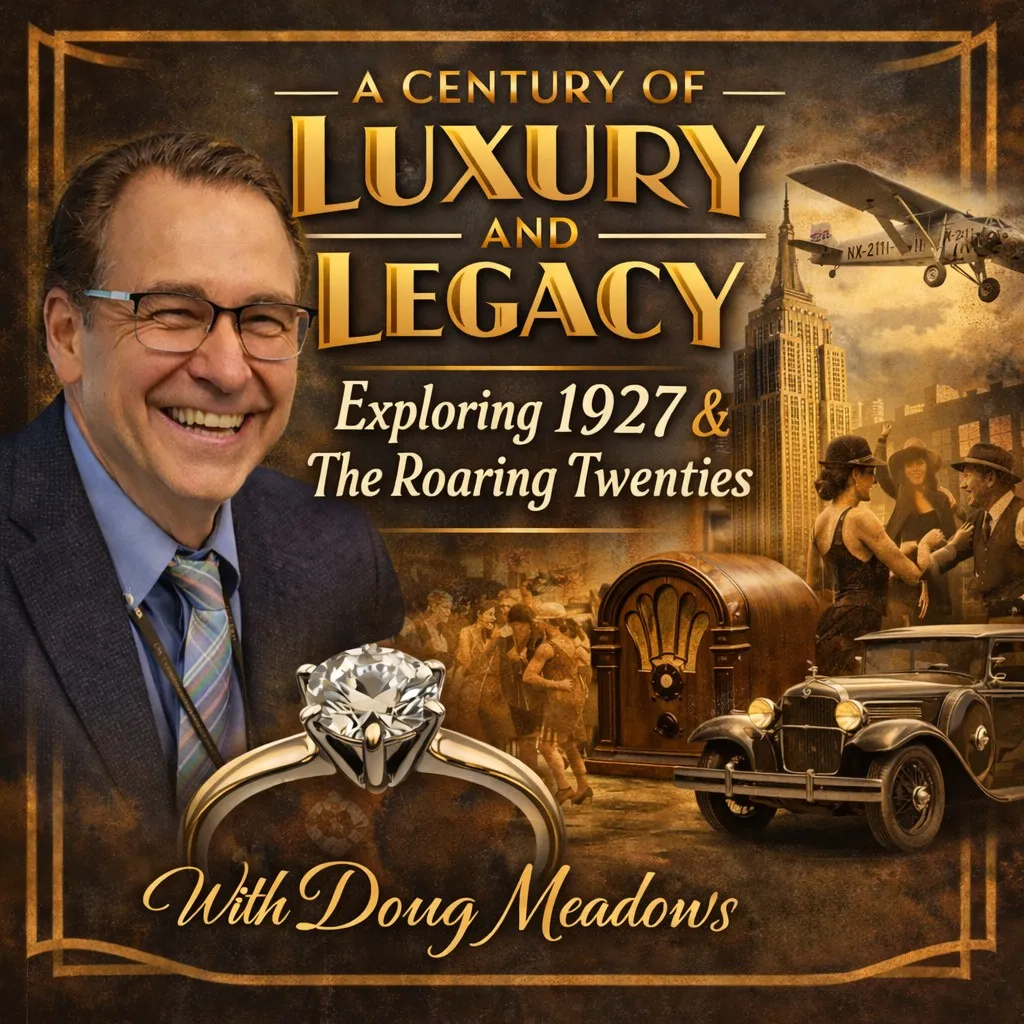
A Century of Luxury & Legacy
Looking Back at 1926 — and Stepping Into 1927
Hello, I’m Doug Meadows — founder, visionary, and hero maker here at David Douglas Diamonds. Welcome back to A Century of Luxury & Legacy.
As we slowly wrap up 1926 and begin stepping into 1927, I’ve found myself doing something a little unexpected: building timelines. Not just business timelines, but family timelines. I started looking at how old my dad would have been during certain moments in history… how old I would have been… how old Joseph would have been.
And the truth is — in 1926, none of us were around yet.
My dad wouldn’t be born for another five years. I wouldn’t arrive for another forty-four. Joseph wouldn’t be here for another seventy-seven. Yet decisions made that year — quietly, faithfully — shaped all of our lives.
That’s the weight of legacy.
Business Is Always a Mix of Good, Bad, and Ugly
When I think about my grandfather’s world, I don’t romanticize it. Business has always carried risk, struggle, innovation, and tragedy — in every generation.
As we walk through this hundred-year journey together, we’ll talk about the highs and the lows. The breakthroughs and the setbacks. Technology and hardships have always walked side by side.
And when I think about technology today — laser welders, CAD, 3D printing — I have to pause and ask:
What was “technology” in my grandfather’s time?
No modern casting. No computers. No digital modeling.
But there was change.
The automobile reshaped commerce. Radio reshaped communication. People could travel farther, shop differently, hear news instantly. In 1926, innovation was happening — just in different forms.
Jewelry was still made by hand. Slowly. Carefully. Imperfectly. And in many ways, that imperfection is what makes it beautiful today.
Enter the Roaring Twenties
By 1927, America was optimistic.
Prohibition was in full swing. Speakeasies were everywhere. Detroit was exploding in size as the auto industry boomed. Cars were becoming common, which changed how people lived — and how they shopped.
Route 66 had just been established, signaling mobility and freedom. Radios were becoming the centerpiece of the household — the way televisions were when I was growing up.
Families gathered around them for news, storytelling, music, even Sunday morning devotions.
And in 1927, Americans listened as Charles Lindbergh crossed the Atlantic — the first to do so alone. I can only imagine the pride, the suspense, the shared experience of hearing those updates crackle through the radio.
Underneath that optimism, though, cracks were forming. Easy credit. Fragile economics. Things we’ll explore more as this story unfolds.
History has a way of whispering warnings long before it shouts.
Who Was Buying Jewelry in the 1920s?
This question stopped me in my tracks.
My grandfather was a wholesaler. His customer was the retailer. But their customer? Who were they? What were they buying — and why?
Jewelry then, much like now, marked milestones:
Engagements. Celebrations. Status. Identity.
But engagement rings weren’t always diamonds.
Diamonds were available — but not required. Proposals might involve a simple gold band, a colored gemstone, or sometimes nothing at all.
Today, it almost feels mandatory that an engagement include a diamond. Even that is shifting now — with lab-grown and natural diamonds sharing space in modern conversations.
At our store today, roughly 80% of engagement diamonds are lab-grown, and about 20% are natural. That ratio alone tells a story about change — and choice.
Tiffany Set the Form. De Beers Set the Expectation.
For years, I assumed Tiffany & Co. created the engagement ring.
They didn’t — but they standardized it.
The simple six-prong solitaire lifted the diamond up, made it visible, elegant, unmistakable. It became a visual declaration: I’m taken.
But there was still no cultural pressure to buy a diamond.
That came later — when De Beers entered the picture.
If I had to sum it up:
Tiffany legitimized the form
De Beers created the expectation
Together, they reshaped an industry — and culture itself.
We’ll unpack that story more as we continue.
What Legacy Really Means
As I look back, I’ve realized something important:
Legacy is not about repeating the past.
We don’t make jewelry the way my grandfather did — and trying to would be foolish. Technology has changed for the better in countless ways.
But some things should be repeated.
Integrity. Honesty. Fair dealing. Education. Respect.
My dad and uncle never spoke poorly of their father. They ran their business uprightly. They took time to educate customers — not pressure them.
And I know where that came from.
We still believe in giving people choice, not pressure. We believe in guiding, not pushing. Helping people understand what they’re buying — not rushing them into a decision.
I hate pressure sales. Always have. If I feel like I’m in a boiler room, I’m out.
That philosophy didn’t start with me. I inherited it.
Looking Ahead
As we step fully into 1927, this journey is only getting richer.
More stories. More lessons. More connections between past and present.
Legacy isn’t about nostalgia — it’s about stewardship. Carrying forward what matters, while letting go of what no longer serves.
And honestly?
This is getting funner and funner every week.
Thanks for walking this journey with me. I can’t wait to share what’s next.
— Doug
A Century of Luxury & Legacy
Looking Back at 1926 — and Stepping Into 1927
Hello, I’m Doug Meadows — founder, visionary, and hero maker here at David Douglas Diamonds. Welcome back to A Century of Luxury & Legacy.
As we slowly wrap up 1926 and begin stepping into 1927, I’ve found myself doing something a little unexpected: building timelines. Not just business timelines, but family timelines. I started looking at how old my dad would have been during certain moments in history… how old I would have been… how old Joseph would have been.
And the truth is — in 1926, none of us were around yet.
My dad wouldn’t be born for another five years. I wouldn’t arrive for another forty-four. Joseph wouldn’t be here for another seventy-seven. Yet decisions made that year — quietly, faithfully — shaped all of our lives.
That’s the weight of legacy.
Business Is Always a Mix of Good, Bad, and Ugly
When I think about my grandfather’s world, I don’t romanticize it. Business has always carried risk, struggle, innovation, and tragedy — in every generation.
As we walk through this hundred-year journey together, we’ll talk about the highs and the lows. The breakthroughs and the setbacks. Technology and hardships have always walked side by side.
And when I think about technology today — laser welders, CAD, 3D printing — I have to pause and ask:
What was “technology” in my grandfather’s time?
No modern casting. No computers. No digital modeling.
But there was change.
The automobile reshaped commerce. Radio reshaped communication. People could travel farther, shop differently, hear news instantly. In 1926, innovation was happening — just in different forms.
Jewelry was still made by hand. Slowly. Carefully. Imperfectly. And in many ways, that imperfection is what makes it beautiful today.
Enter the Roaring Twenties
By 1927, America was optimistic.
Prohibition was in full swing. Speakeasies were everywhere. Detroit was exploding in size as the auto industry boomed. Cars were becoming common, which changed how people lived — and how they shopped.
Route 66 had just been established, signaling mobility and freedom. Radios were becoming the centerpiece of the household — the way televisions were when I was growing up.
Families gathered around them for news, storytelling, music, even Sunday morning devotions.
And in 1927, Americans listened as Charles Lindbergh crossed the Atlantic — the first to do so alone. I can only imagine the pride, the suspense, the shared experience of hearing those updates crackle through the radio.
Underneath that optimism, though, cracks were forming. Easy credit. Fragile economics. Things we’ll explore more as this story unfolds.
History has a way of whispering warnings long before it shouts.
Who Was Buying Jewelry in the 1920s?
This question stopped me in my tracks.
My grandfather was a wholesaler. His customer was the retailer. But their customer? Who were they? What were they buying — and why?
Jewelry then, much like now, marked milestones:
Engagements. Celebrations. Status. Identity.
But engagement rings weren’t always diamonds.
Diamonds were available — but not required. Proposals might involve a simple gold band, a colored gemstone, or sometimes nothing at all.
Today, it almost feels mandatory that an engagement include a diamond. Even that is shifting now — with lab-grown and natural diamonds sharing space in modern conversations.
At our store today, roughly 80% of engagement diamonds are lab-grown, and about 20% are natural. That ratio alone tells a story about change — and choice.
Tiffany Set the Form. De Beers Set the Expectation.
For years, I assumed Tiffany & Co. created the engagement ring.
They didn’t — but they standardized it.
The simple six-prong solitaire lifted the diamond up, made it visible, elegant, unmistakable. It became a visual declaration: I’m taken.
But there was still no cultural pressure to buy a diamond.
That came later — when De Beers entered the picture.
If I had to sum it up:
Tiffany legitimized the form
De Beers created the expectation
Together, they reshaped an industry — and culture itself.
We’ll unpack that story more as we continue.
What Legacy Really Means
As I look back, I’ve realized something important:
Legacy is not about repeating the past.
We don’t make jewelry the way my grandfather did — and trying to would be foolish. Technology has changed for the better in countless ways.
But some things should be repeated.
Integrity. Honesty. Fair dealing. Education. Respect.
My dad and uncle never spoke poorly of their father. They ran their business uprightly. They took time to educate customers — not pressure them.
And I know where that came from.
We still believe in giving people choice, not pressure. We believe in guiding, not pushing. Helping people understand what they’re buying — not rushing them into a decision.
I hate pressure sales. Always have. If I feel like I’m in a boiler room, I’m out.
That philosophy didn’t start with me. I inherited it.
Looking Ahead
As we step fully into 1927, this journey is only getting richer.
More stories. More lessons. More connections between past and present.
Legacy isn’t about nostalgia — it’s about stewardship. Carrying forward what matters, while letting go of what no longer serves.
And honestly?
This is getting funner and funner every week.
Thanks for walking this journey with me. I can’t wait to share what’s next.
— Doug