
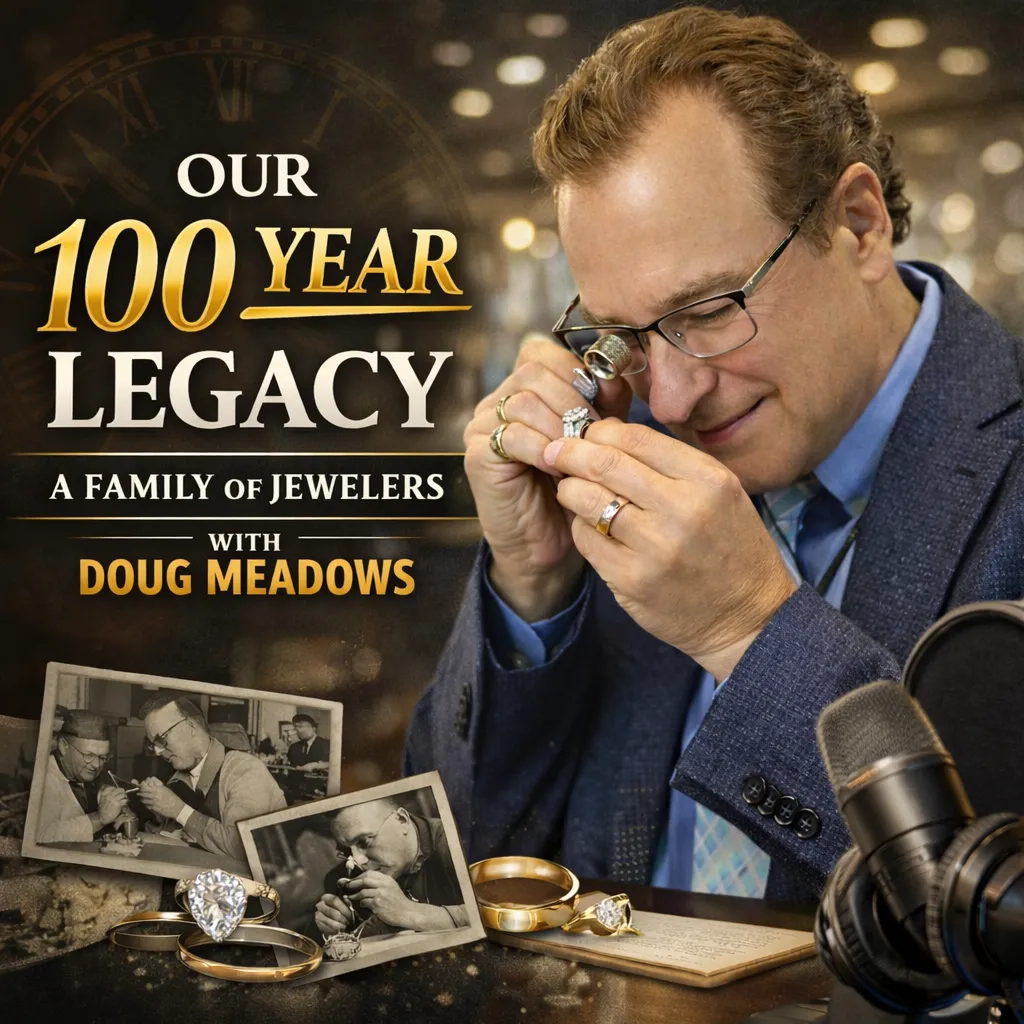
Week 3: Living Through Change – 1/18/2026
Reflections from 1928–1929
As I continue this journey through A Century of Luxury & Legacy, I’ve found myself slowing down—not just to look at years on a timeline, but to truly consider what it must have felt like to live through them.
This week, my thoughts have been anchored in 1928 and 1929—a short span of time filled with enormous cultural shifts, innovation, optimism, and, quietly, the beginnings of great uncertainty. More than anything, I’ve been thinking about what those years meant to my grandfather—not as a historical figure, but as a young man, a husband, a father, and a jeweler trying to build a future.
A World Moving Fast
In 1928, the world was changing at a breathtaking pace.
That was the year penicillin was discovered—a breakthrough that transformed illnesses like pneumonia and strep throat from near-certain death sentences into treatable conditions. Medical science took a leap forward that would save millions of lives in the decades to come.
It was also the year Mickey Mouse appeared on the screen for the first time in Steamboat Willie. With television still years away from being common in households, movies were a shared cultural experience. That same year marked the very first Academy Awards, an event that would eventually become a stage where fashion, jewelry, and style influence trends around the world.
I can’t help but wonder what those first awards sparked. What styles emerged? What jewelry designs caught the public’s eye? Even then, culture and craftsmanship were already intertwined.
That year also saw the release of Animal Crackers by the Marx Brothers—a group whose humor shaped generations, including mine. It surprised me to learn that Groucho Marx was already 38 years old at the time. It’s a small reminder that people we associate with timeless creativity were often well into adulthood, navigating their own risks and responsibilities.
The Illusion of Stability
As 1928 gave way to 1929, the Roaring Twenties began to wind down. On the surface, things looked strong—booming markets, optimism, confidence. But underneath, cracks were forming.
Violence and organized crime were growing concerns. Prohibition fueled underground networks, culminating in events like the St. Valentine’s Day Massacre. Law enforcement intensified efforts against organized crime, eventually bringing down figures like Al Capone.
Yet even with all of this unfolding, there was still a widespread belief that prosperity would continue. Few could see what was coming.
Then, in October of 1929, the stock market crashed—and with it began a long and painful chapter in American history.
A Young Jeweler’s Decision
In the middle of all this, my grandfather was making decisions of his own.
He was only in his mid-twenties. He had been married just a few years. He was running his jewelry business out of the Detroit Metropolitan Building—on the ninth floor, room five—a building designed specifically for jewelers.
But around that time, he made a bold move.
Just five blocks away, a new building had opened—the Michigan Theater Building. It was part of a developing area of Detroit, and for reasons I may never fully understand, my grandfather decided to relocate his business there.
Anyone who has ever moved a business knows how difficult that decision can be. It’s disruptive. It’s risky. It’s exhausting. I’ve moved my business before, and I can say with confidence—it’s never easy and never fun.
To think of him making that move at such a young age, while starting a family, while the world around him was on the verge of collapse, gives me a deeper appreciation for the courage it must have taken. He didn’t have hindsight. He didn’t know what the next decade would bring. He simply made the best decision he could with the information he had.
That Michigan Theater Building is one I remember visiting as a child. At the time, I had no idea how much history—and how many brave choices—were tied to those walls.
Legacy in the Ordinary
The more I learn about the past, the more my appreciation grows—not just for the success of the business, but for the humanity behind it.
Legacy isn’t built in grand gestures alone. More often, it’s shaped by ordinary decisions made during uncertain times. Decisions made by people who keep showing up, keep working, and keep believing in the future—even when it’s unclear.
What my grandfather built didn’t just influence an industry. It shaped our family. It shaped me. And now, it continues through Joseph and the generations still to come.
As we continue this journey, my hope is not just to tell stories—but to honor the faith, resilience, and courage that made them possible.
Thank you for being part of this journey. I look forward to discovering what comes next together.
Reflections from 1928–1929
As I continue this journey through A Century of Luxury & Legacy, I’ve found myself slowing down—not just to look at years on a timeline, but to truly consider what it must have felt like to live through them.
This week, my thoughts have been anchored in 1928 and 1929—a short span of time filled with enormous cultural shifts, innovation, optimism, and, quietly, the beginnings of great uncertainty. More than anything, I’ve been thinking about what those years meant to my grandfather—not as a historical figure, but as a young man, a husband, a father, and a jeweler trying to build a future.
A World Moving Fast
In 1928, the world was changing at a breathtaking pace.
That was the year penicillin was discovered—a breakthrough that transformed illnesses like pneumonia and strep throat from near-certain death sentences into treatable conditions. Medical science took a leap forward that would save millions of lives in the decades to come.
It was also the year Mickey Mouse appeared on the screen for the first time in Steamboat Willie. With television still years away from being common in households, movies were a shared cultural experience. That same year marked the very first Academy Awards, an event that would eventually become a stage where fashion, jewelry, and style influence trends around the world.
I can’t help but wonder what those first awards sparked. What styles emerged? What jewelry designs caught the public’s eye? Even then, culture and craftsmanship were already intertwined.
That year also saw the release of Animal Crackers by the Marx Brothers—a group whose humor shaped generations, including mine. It surprised me to learn that Groucho Marx was already 38 years old at the time. It’s a small reminder that people we associate with timeless creativity were often well into adulthood, navigating their own risks and responsibilities.
The Illusion of Stability
As 1928 gave way to 1929, the Roaring Twenties began to wind down. On the surface, things looked strong—booming markets, optimism, confidence. But underneath, cracks were forming.
Violence and organized crime were growing concerns. Prohibition fueled underground networks, culminating in events like the St. Valentine’s Day Massacre. Law enforcement intensified efforts against organized crime, eventually bringing down figures like Al Capone.
Yet even with all of this unfolding, there was still a widespread belief that prosperity would continue. Few could see what was coming.
Then, in October of 1929, the stock market crashed—and with it began a long and painful chapter in American history.
A Young Jeweler’s Decision
In the middle of all this, my grandfather was making decisions of his own.
He was only in his mid-twenties. He had been married just a few years. He was running his jewelry business out of the Detroit Metropolitan Building—on the ninth floor, room five—a building designed specifically for jewelers.
But around that time, he made a bold move.
Just five blocks away, a new building had opened—the Michigan Theater Building. It was part of a developing area of Detroit, and for reasons I may never fully understand, my grandfather decided to relocate his business there.
Anyone who has ever moved a business knows how difficult that decision can be. It’s disruptive. It’s risky. It’s exhausting. I’ve moved my business before, and I can say with confidence—it’s never easy and never fun.
To think of him making that move at such a young age, while starting a family, while the world around him was on the verge of collapse, gives me a deeper appreciation for the courage it must have taken. He didn’t have hindsight. He didn’t know what the next decade would bring. He simply made the best decision he could with the information he had.
That Michigan Theater Building is one I remember visiting as a child. At the time, I had no idea how much history—and how many brave choices—were tied to those walls.
Legacy in the Ordinary
The more I learn about the past, the more my appreciation grows—not just for the success of the business, but for the humanity behind it.
Legacy isn’t built in grand gestures alone. More often, it’s shaped by ordinary decisions made during uncertain times. Decisions made by people who keep showing up, keep working, and keep believing in the future—even when it’s unclear.
What my grandfather built didn’t just influence an industry. It shaped our family. It shaped me. And now, it continues through Joseph and the generations still to come.
As we continue this journey, my hope is not just to tell stories—but to honor the faith, resilience, and courage that made them possible.
Thank you for being part of this journey. I look forward to discovering what comes next together.