
Week 6 – A Century of Luxury & Legacy 2/8/2026
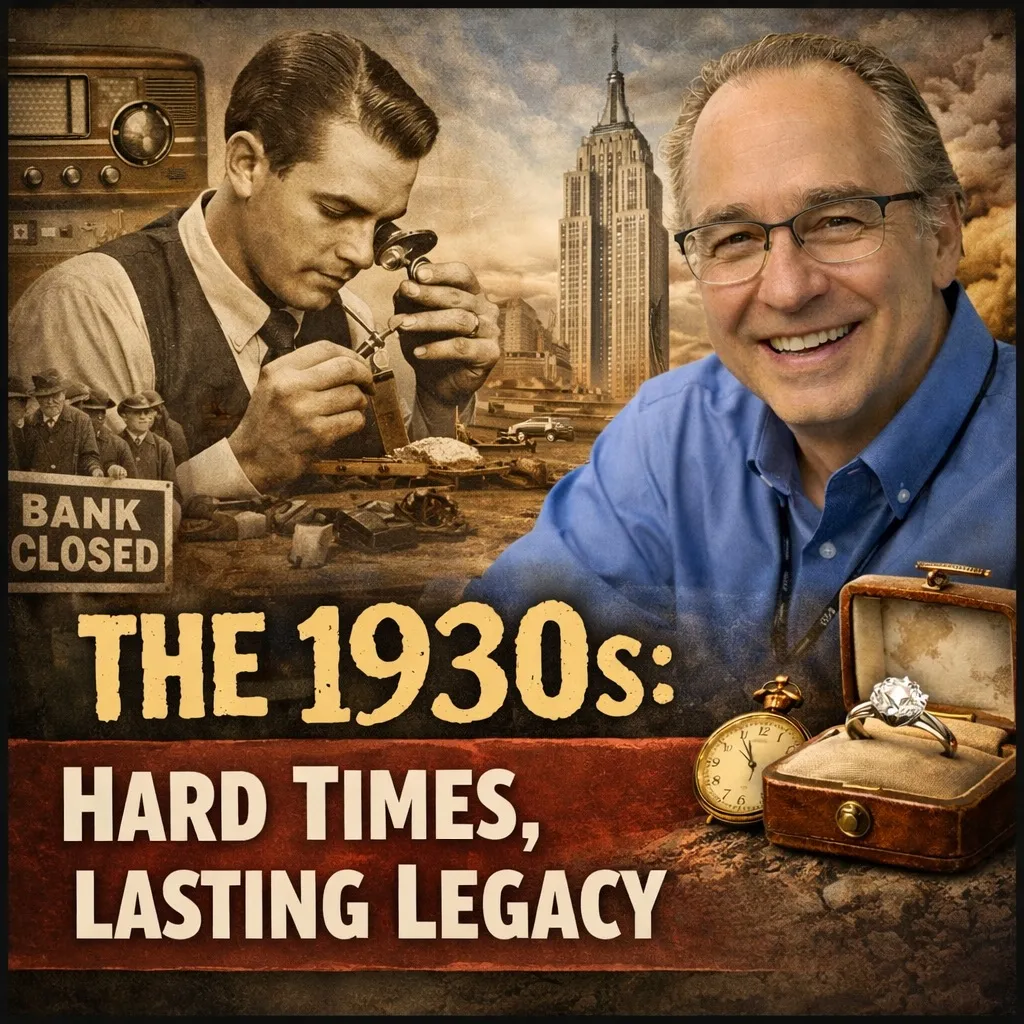
The 1930s: Hard Times, Lasting Legacy
When the 1930s began, my grandfather was just 26 years old.
He had been married about five years. He was just beginning to build a family. And he was trying to build a business.
By the time the decade ended, he would have four children — my uncle Gene was born in 1930, my dad, Glenn in 1931, my aunt Phyliss in 1934, and my uncle Art in 1937. All through one of the hardest decades in American history.
And then… the Great Depression hit.
When the Economy Collapses
Unemployment rose to 25%.
More than 5,000 banks failed.
Businesses closed by the tens of thousands.
The gold standard was abandoned in 1933, and Americans were required to turn in their gold coins and bullion. That decision reshaped the financial landscape for generations.
Imagine being a 27-year-old father with babies at home and a young business on your shoulders while all of that is happening.
I don’t have detailed records of what my grandfather thought or felt during those years. But I can imagine the pressure. The uncertainty. The responsibility.
And yet — his business survived.
Repairs Mattered More Than Replacement
One of the most fascinating lessons from the 1930s is this:
When times were tough, repairs were busy.
People didn’t buy new things. They fixed what they had. They repurposed. They made do.
That reality fit perfectly with my grandfather’s niche. He ran what we call in the jewelry industry a trade shop — doing wholesale repair and service work for retailers who didn’t have a jeweler on staff.
He set diamonds.
Sized rings.
Soldered chains.
Handled intricate repairs.
Retail jewelers would send him the work, and he would send it back finished and ready for their customers.
My dad used to say:
“When times were tough, repairs were busy. When times were good, sales were good.”
In other words, there was always something to offer.
That model created resilience.
Barter and Adaptability
During the Depression, bartering became common. People traded goods and services instead of using cash.
Interestingly, I’ve seen that same principle work in my lifetime. For over 15 years, my brother and I have participated in a barter exchange. We’ve used it for renovations, fixtures, electricians, plumbing, travel, dining out — all kinds of services.
In tough seasons, adaptability keeps you alive.
That’s not just a 1930s lesson. That’s an always lesson.
Culture Didn’t Die — It Adapted
Even in hardship, people still found ways to breathe.
The radio became the heartbeat of the home. Families gathered around it at night. Big band music and jazz flourished. Talking pictures had just been introduced. Movies became an escape.
In 1931, the Empire State Building opened. The tallest building in the world and held the record for 40 years — built in just 13 months during one of the worst economic crises in history. It gave people jobs. It represented hope.
In 1935, Monopoly was released — a game about buying and losing property during economic struggle. And here we are nearly a century later, still playing it.
In 1937, Snow White and the Seven Dwarfs debuted — the first full-length animated feature film.
Culture didn’t disappear.
It adjusted.
Hardship and Resilience
The 1930s also brought the Dust Bowl. Drought devastated farmland in Texas and Oklahoma. Families migrated west in search of survival.
In 1939, Hitler invaded Poland, and the world stood on the edge of war.
Through it all, my grandfather kept building. Kept serving. Kept providing.
By 1939, he was 35 years old. He had survived bank collapses, gold resets, cultural shifts, and the beginning of global conflict — all while raising four children and running a business.
Had he not endured, I wouldn’t be here today.
b
I often think about that tenacity.
Every generation after my grandfather has faced hard seasons. We’ve had good times and tough times. That’s business. That’s life.
But the thread that runs through all of it is this:
Keep going.
Serve well.
Adapt.
Repair when needed.
Remember what matters.
Today we see something similar happening. A generation passes down jewelry to the next. Styles change. Tastes shift. Sometimes children don’t want what their parents treasured.
So what do we do?
We repurpose.
We redesign.
We refashion.
We take Grandma’s diamonds and create something new — something that still carries memory. I call them “stones of remembrance.”
Because at the end of the day, jewelry isn’t just cold metal and hard rocks.
It’s story.
It’s legacy.
It’s celebration.
It’s remembrance.
Hard Times. Lasting Legacy.
The 1930s were not easy.
But resilience built something that lasted.
And here we are — nearly 100 years later — still telling the story.
That’s legacy.
And I wouldn’t trade it for anything.
The 1930s: Hard Times, Lasting Legacy
When the 1930s began, my grandfather was just 26 years old.
He had been married about five years. He was just beginning to build a family. And he was trying to build a business.
By the time the decade ended, he would have four children — my uncle Gene was born in 1930, my dad, Glenn in 1931, my aunt Phyliss in 1934, and my uncle Art in 1937. All through one of the hardest decades in American history.
And then… the Great Depression hit.
When the Economy Collapses
Unemployment rose to 25%.
More than 5,000 banks failed.
Businesses closed by the tens of thousands.
The gold standard was abandoned in 1933, and Americans were required to turn in their gold coins and bullion. That decision reshaped the financial landscape for generations.
Imagine being a 27-year-old father with babies at home and a young business on your shoulders while all of that is happening.
I don’t have detailed records of what my grandfather thought or felt during those years. But I can imagine the pressure. The uncertainty. The responsibility.
And yet — his business survived.
Repairs Mattered More Than Replacement
One of the most fascinating lessons from the 1930s is this:
When times were tough, repairs were busy.
People didn’t buy new things. They fixed what they had. They repurposed. They made do.
That reality fit perfectly with my grandfather’s niche. He ran what we call in the jewelry industry a trade shop — doing wholesale repair and service work for retailers who didn’t have a jeweler on staff.
He set diamonds.
Sized rings.
Soldered chains.
Handled intricate repairs.
Retail jewelers would send him the work, and he would send it back finished and ready for their customers.
My dad used to say:
“When times were tough, repairs were busy. When times were good, sales were good.”
In other words, there was always something to offer.
That model created resilience.
Barter and Adaptability
During the Depression, bartering became common. People traded goods and services instead of using cash.
Interestingly, I’ve seen that same principle work in my lifetime. For over 15 years, my brother and I have participated in a barter exchange. We’ve used it for renovations, fixtures, electricians, plumbing, travel, dining out — all kinds of services.
In tough seasons, adaptability keeps you alive.
That’s not just a 1930s lesson. That’s an always lesson.
Culture Didn’t Die — It Adapted
Even in hardship, people still found ways to breathe.
The radio became the heartbeat of the home. Families gathered around it at night. Big band music and jazz flourished. Talking pictures had just been introduced. Movies became an escape.
In 1931, the Empire State Building opened. The tallest building in the world and held the record for 40 years — built in just 13 months during one of the worst economic crises in history. It gave people jobs. It represented hope.
In 1935, Monopoly was released — a game about buying and losing property during economic struggle. And here we are nearly a century later, still playing it.
In 1937, Snow White and the Seven Dwarfs debuted — the first full-length animated feature film.
Culture didn’t disappear.
It adjusted.
Hardship and Resilience
The 1930s also brought the Dust Bowl. Drought devastated farmland in Texas and Oklahoma. Families migrated west in search of survival.
In 1939, Hitler invaded Poland, and the world stood on the edge of war.
Through it all, my grandfather kept building. Kept serving. Kept providing.
By 1939, he was 35 years old. He had survived bank collapses, gold resets, cultural shifts, and the beginning of global conflict — all while raising four children and running a business.
Had he not endured, I wouldn’t be here today.
b
I often think about that tenacity.
Every generation after my grandfather has faced hard seasons. We’ve had good times and tough times. That’s business. That’s life.
But the thread that runs through all of it is this:
Keep going.
Serve well.
Adapt.
Repair when needed.
Remember what matters.
Today we see something similar happening. A generation passes down jewelry to the next. Styles change. Tastes shift. Sometimes children don’t want what their parents treasured.
So what do we do?
We repurpose.
We redesign.
We refashion.
We take Grandma’s diamonds and create something new — something that still carries memory. I call them “stones of remembrance.”
Because at the end of the day, jewelry isn’t just cold metal and hard rocks.
It’s story.
It’s legacy.
It’s celebration.
It’s remembrance.
Hard Times. Lasting Legacy.
The 1930s were not easy.
But resilience built something that lasted.
And here we are — nearly 100 years later — still telling the story.
That’s legacy.
And I wouldn’t trade it for anything.