
A Century of Luxury & Legacy
1926: Winnie the Pooh, Route 66, And Our Jewelry Legacy Began
Published: Jan 4, 2026
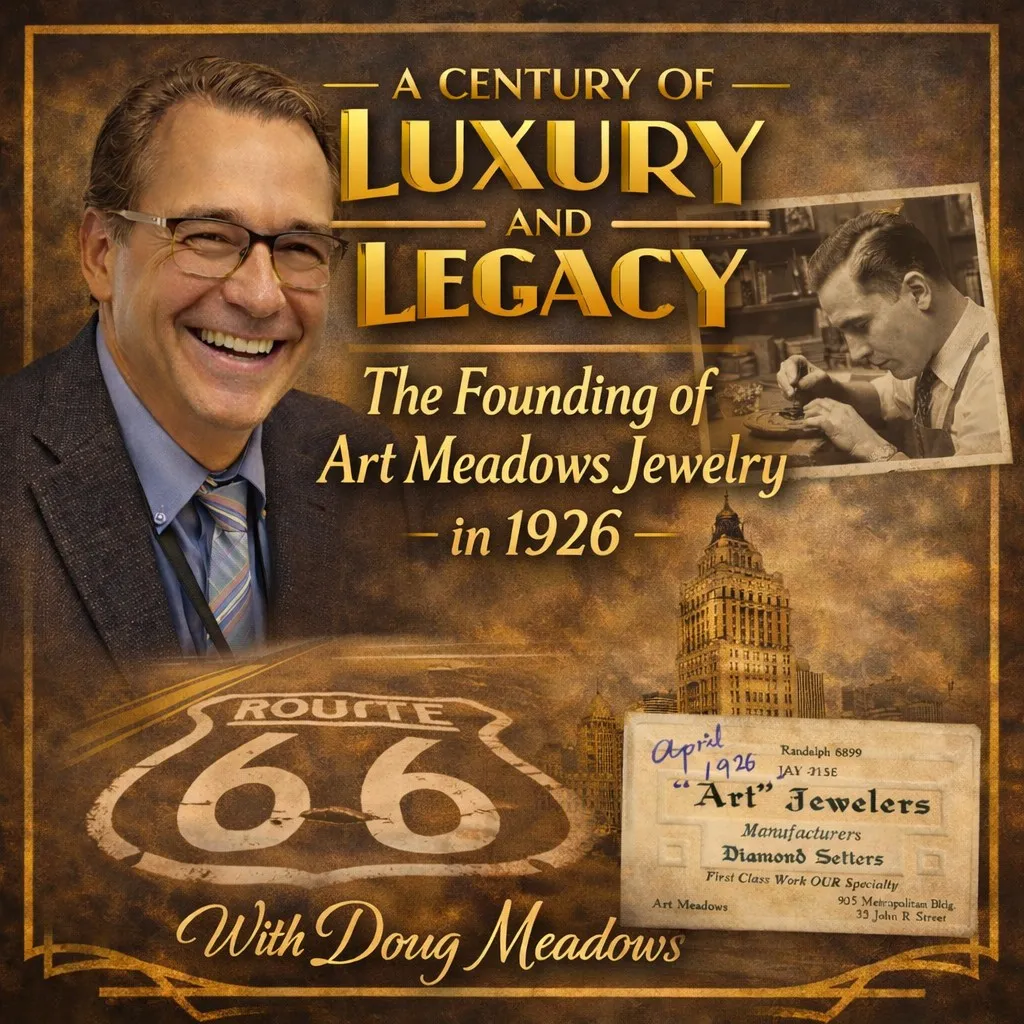
Week One: 1926 — The Beginning of a Century of Legacy & Luxury
Hello, I’m Doug Meadows — founder, visionary, and hero-maker here at David Douglas Diamonds.
As we step into 2026, we are celebrating something incredibly special: a full century of legacy and luxury. One hundred years ago, in 1926, my grandfather quietly stepped into the jewelry industry — not knowing that his decision would ripple across generations.
This first week, I simply want to pause… and look back.
A Glimpse Into 1926
When I started researching 1926, I realized just how much was happening in the world. We often hear about the Roaring Twenties, but until I slowed down and looked closely, I didn’t fully appreciate what that era represented.
Just five years later, the Empire State Building would open its doors. That same year, Winnie-the-Pooh first appeared on bookshelves. Television saw its earliest demonstrations of moving pictures. And on November 11, 1926, Route 66 was officially established — linking Chicago to Santa Monica and earning the nickname The Mother Road.
Route 66 holds a special place in my heart. My wife and I once drove it from California to Chicago in a convertible Miata. Two weeks on the road — unsure whether we’d end that trip exhausted or closer than ever. Thankfully, it became one of the most memorable adventures of our lives.
It was also the year NBC launched radio broadcasting, Marilyn Monroe, Fred Gwynne, and Hugh Hefner were born — and sadly, the year we lost Harry Houdini, who passed away in Detroit at just 52 years old.
Even baseball had its heartbreak, as Babe Ruth & the New York Yankees lost the World Series to the St. Louis Cardinals.
And in 1926, you could send a letter to President Calvin Coolidge for just two cents.
America at 150 — And Detroit in Motion
The Fourth of July in 1926 marked the 150th anniversary of the Declaration of Independence — the Sesquicentennial. Celebrations stretched throughout the year, especially in Philadelphia, where President Coolidge delivered a powerful speech reaffirming America’s founding principles: equality, individual rights, and consent of the governed — faith and heritage standing firm in a rapidly modernizing world.
Meanwhile, Detroit was buzzing.
Henry Ford announced the 40-hour work week — eight hours of work, eight hours of leisure, eight hours of rest. A radical idea at the time, and one that still shapes how we live today. The Pontiac 6 rolled off assembly lines. Innovation was everywhere.
And in the heart of downtown Detroit stood a building that would quietly shape my family’s future.
The Metropolitan Building — A Jewelers’ World
At 33 John R. Street, the Metropolitan Building had opened just months earlier. Unlike most downtown buildings, it wasn’t designed as office space. From the beginning, it was built for jewelers.
Often called The Jewelers Building or Jewelers Court, it housed diamond cutters, goldsmiths, silver workers, wholesalers, manufacturers, and retail shops. Compressed air fed the workbenches. Gas forges burned below. Marble floors, gothic elevators, bronze railings, and a white-marble lobby gave the space an air of quiet elegance.
The fifth through tenth floors were almost entirely jewelers.
My grandfather worked on the ninth floor.
A 22-Year-Old Decision That Started It All
At just 22 years old, my grandfather Arthur — Art Meadows — borrowed money from his new bride to open his jewelry business. We don’t yet know the exact date he opened his doors. That research continues.
But we do have his business card:
Art Jewelers
Manufacturers • Diamond Setters
First-class work our specialty
905 Metropolitan Building
33 John R. Street
Detroit, Michigan
And with that card, we know this: the legacy began.
Remembering the Man Behind the Legacy
Truthfully, I didn’t know my grandfather very well.
By the time I was old enough to remember him clearly, he had retired and moved to Florida. I remember wonderful visits — late-night games of Indian dice, swimming in his backyard pool, laughter and warmth that made his home feel like a kid’s paradise.
But I also carry regret.
In my early twenties, I visited him and failed to slow down. I missed moments I’ll never get back. I was young, selfish, and distracted — and I wish I had listened more, asked more, learned more.
That regret has shaped me.
Carrying the Legacy Forward
I don’t know what first drew my grandfather into the jewelry industry. But I’m deeply grateful that he followed that path.
Because of him, we are here — nearly 100 years later — still crafting, still serving, still honoring people through moments that matter.
My hope is simple:
That I prove worthy of the legacy I’ve inherited.
That I steward it well.
And that I carry it forward with intention, humility, and heart.
This is just the beginning.
Next week, we’ll open another chapter.
Thank you for joining me on this journey.
Hello, I’m Doug Meadows — founder, visionary, and hero-maker here at David Douglas Diamonds.
As we step into 2026, we are celebrating something incredibly special: a full century of legacy and luxury. One hundred years ago, in 1926, my grandfather quietly stepped into the jewelry industry — not knowing that his decision would ripple across generations.
This first week, I simply want to pause… and look back.
A Glimpse Into 1926
When I started researching 1926, I realized just how much was happening in the world. We often hear about the Roaring Twenties, but until I slowed down and looked closely, I didn’t fully appreciate what that era represented.
Just five years later, the Empire State Building would open its doors. That same year, Winnie-the-Pooh first appeared on bookshelves. Television saw its earliest demonstrations of moving pictures. And on November 11, 1926, Route 66 was officially established — linking Chicago to Santa Monica and earning the nickname The Mother Road.
Route 66 holds a special place in my heart. My wife and I once drove it from California to Chicago in a convertible Miata. Two weeks on the road — unsure whether we’d end that trip exhausted or closer than ever. Thankfully, it became one of the most memorable adventures of our lives.
It was also the year NBC launched radio broadcasting, Marilyn Monroe, Fred Gwynne, and Hugh Hefner were born — and sadly, the year we lost Harry Houdini, who passed away in Detroit at just 52 years old.
Even baseball had its heartbreak, as Babe Ruth & the New York Yankees lost the World Series to the St. Louis Cardinals.
And in 1926, you could send a letter to President Calvin Coolidge for just two cents.
America at 150 — And Detroit in Motion
The Fourth of July in 1926 marked the 150th anniversary of the Declaration of Independence — the Sesquicentennial. Celebrations stretched throughout the year, especially in Philadelphia, where President Coolidge delivered a powerful speech reaffirming America’s founding principles: equality, individual rights, and consent of the governed — faith and heritage standing firm in a rapidly modernizing world.
Meanwhile, Detroit was buzzing.
Henry Ford announced the 40-hour work week — eight hours of work, eight hours of leisure, eight hours of rest. A radical idea at the time, and one that still shapes how we live today. The Pontiac 6 rolled off assembly lines. Innovation was everywhere.
And in the heart of downtown Detroit stood a building that would quietly shape my family’s future.
The Metropolitan Building — A Jewelers’ World
At 33 John R. Street, the Metropolitan Building had opened just months earlier. Unlike most downtown buildings, it wasn’t designed as office space. From the beginning, it was built for jewelers.
Often called The Jewelers Building or Jewelers Court, it housed diamond cutters, goldsmiths, silver workers, wholesalers, manufacturers, and retail shops. Compressed air fed the workbenches. Gas forges burned below. Marble floors, gothic elevators, bronze railings, and a white-marble lobby gave the space an air of quiet elegance.
The fifth through tenth floors were almost entirely jewelers.
My grandfather worked on the ninth floor.
A 22-Year-Old Decision That Started It All
At just 22 years old, my grandfather Arthur — Art Meadows — borrowed money from his new bride to open his jewelry business. We don’t yet know the exact date he opened his doors. That research continues.
But we do have his business card:
Art Jewelers
Manufacturers • Diamond Setters
First-class work our specialty
905 Metropolitan Building
33 John R. Street
Detroit, Michigan
And with that card, we know this: the legacy began.
Remembering the Man Behind the Legacy
Truthfully, I didn’t know my grandfather very well.
By the time I was old enough to remember him clearly, he had retired and moved to Florida. I remember wonderful visits — late-night games of Indian dice, swimming in his backyard pool, laughter and warmth that made his home feel like a kid’s paradise.
But I also carry regret.
In my early twenties, I visited him and failed to slow down. I missed moments I’ll never get back. I was young, selfish, and distracted — and I wish I had listened more, asked more, learned more.
That regret has shaped me.
Carrying the Legacy Forward
I don’t know what first drew my grandfather into the jewelry industry. But I’m deeply grateful that he followed that path.
Because of him, we are here — nearly 100 years later — still crafting, still serving, still honoring people through moments that matter.
My hope is simple:
That I prove worthy of the legacy I’ve inherited.
That I steward it well.
And that I carry it forward with intention, humility, and heart.
This is just the beginning.
Next week, we’ll open another chapter.
Thank you for joining me on this journey.