
A Century of Luxury & Legacy
Route 66 and the 100-Year Journey of Adaptation
Published: Feb 22, 2026
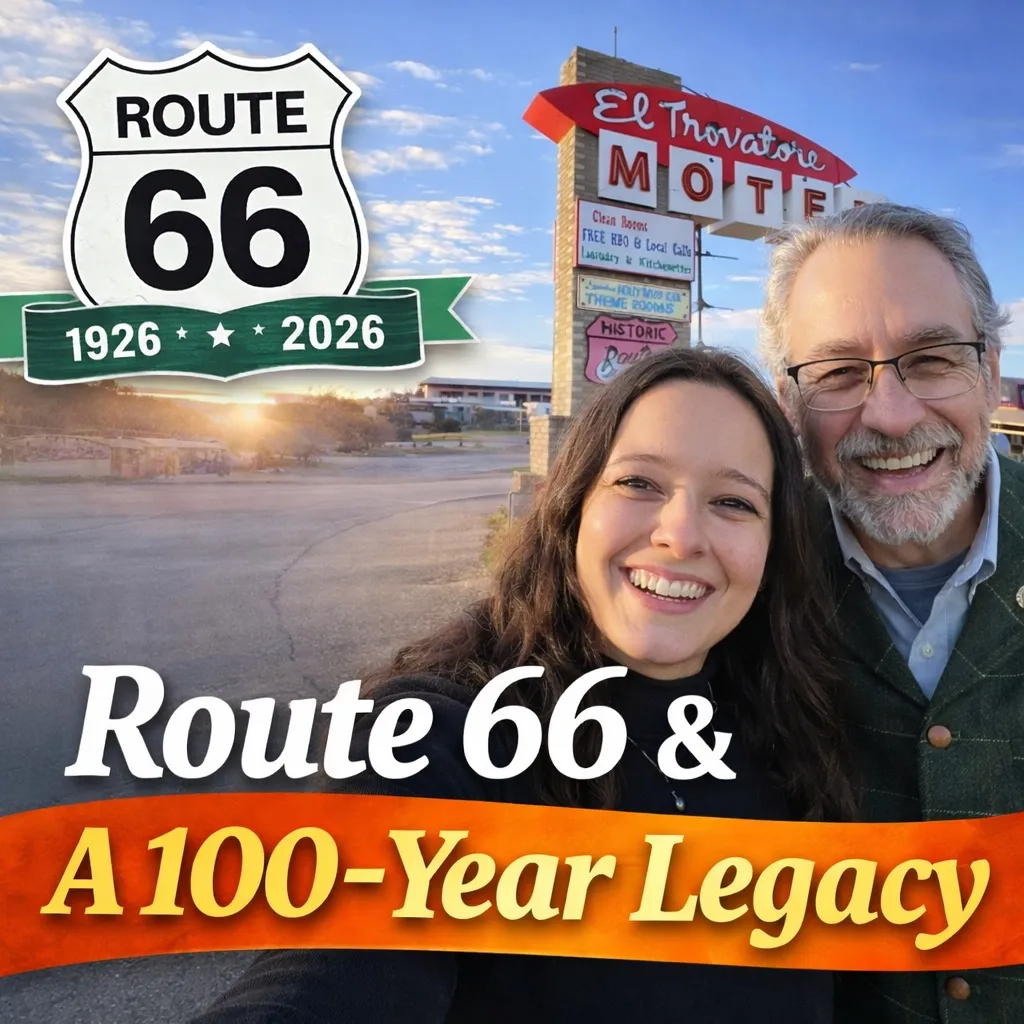
The Mother Road & A 100-Year Legacy
Week 8 – A Century of Luxury & Legacy
In 1926, my grandfather began our family jewelry business.
That same year, Route 66 was commissioned.
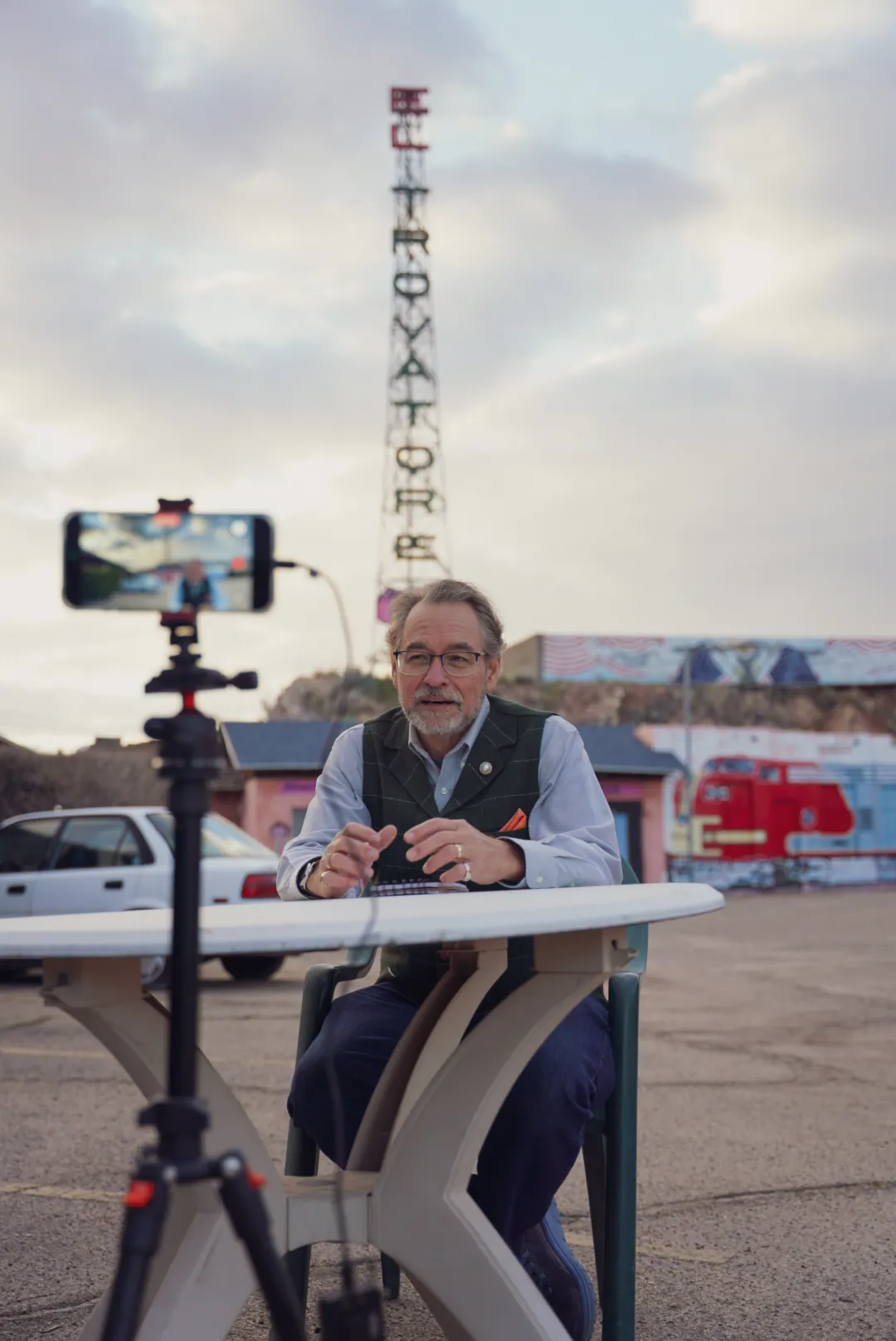
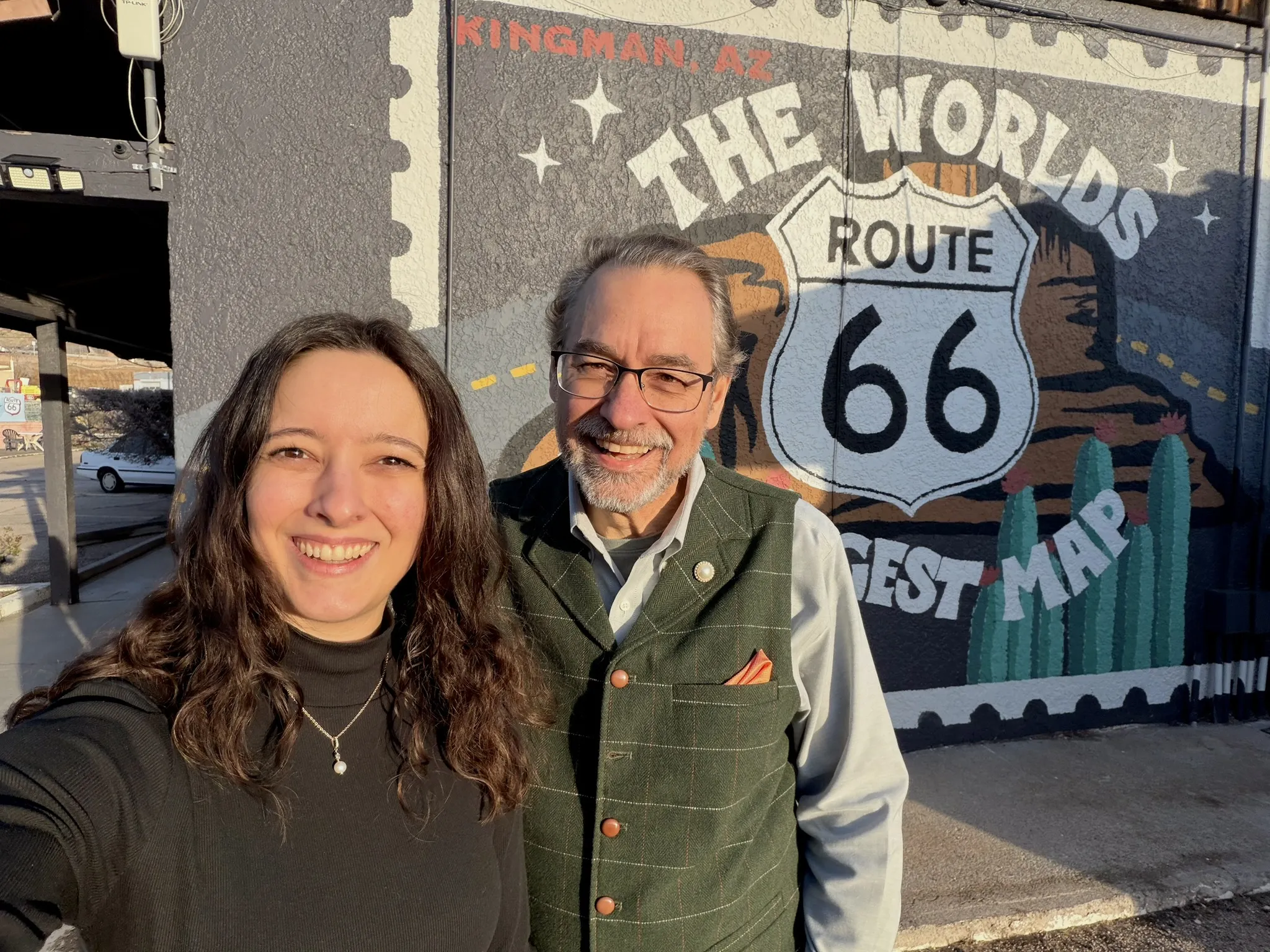
This week, I’m writing from Kingman, Arizona, along the historic Mother Road. Emma and I flew out a few days ago, spent time at the Grand Canyon, and made our way along portions of Route 66 — staying in places that have welcomed travelers for nearly a century.
There’s something powerful about standing in a place that has seen that much history.
1926: A Road and a Beginning
Route 66 stretches 2,448 miles from Chicago to Santa Monica. It took 11 years to fully complete. What began as dirt trails and partial pavement eventually became the main artery carrying Americans westward — through eight states and across deserts, plains, and mountains.
It became known as “The Mother Road,” a term popularized by The Grapes of Wrath, where families fleeing the Dust Bowl followed hope westward toward California.
I watched the film on the flight out here. Seeing the dust storms, the desperation, the handwritten flyers promising work — it made the Great Depression feel less like a chapter in a history book and more like a lived reality.
And during that same era… my grandfather was building a jewelry business.
The Rise, the Fall, and the Adaptation
Route 66 flourished for decades. Towns fought politically to have the road routed through them because they knew what it meant: gas stations, diners, motels, jobs, opportunity.
Then came the Interstate Highway System in 1956.
High-speed interstates bypassed many of those towns. Some adapted. Others became ghost towns. In 1985, Route 66 was officially decommissioned.
But it didn’t disappear.
Today, as we approach its 100-year anniversary, there’s a resurgence. Historic hotels are being restored. Tourists are rediscovering it. Communities are leaning back into the nostalgia and the story.
Legacy has a way of resurfacing.
Driving It Myself
In 2022, my wife and I drove Route 66 in a tiny convertible Miata.
Two duffel bags. Lots of laundry stops. About 200 miles per day.
I didn’t know how it would go. Two weeks in a small car could test any marriage. But it turned into one of the most memorable trips of our lives. When we reached Chicago, I actually didn’t want it to end.
That road slowed us down.
It reminded me of the vastness of America, the grit of small towns, and the beauty of simple experiences.
If I did it again, I’d build in more rest — even a full Sunday pause. Not just because shops close, but because reflection matters. You need space to absorb what you’re experiencing.
That lesson applies to business too.
What Does This Have to Do With Business?
Everything.
Route 66 survived because people chose to preserve it.
Our family business survived because each generation chose to adapt.
The Great Depression wiped out banks, homes, and livelihoods. A fourth of the country was unemployed. Farms were destroyed by the Dust Bowl.
There’s a family story — whether folklore or not — that during the Depression, the last bit of mustard had been used and the jar thrown away. When unexpected guests were coming, they dug it back out of the trash and scraped what little remained.
That’s not comfort. That’s survival.
And yet my grandfather made it through.
He adapted. He adjusted. He endured.
And because he did, I get to stand here nearly 100 years later, telling the story.
The One Constant
If Route 66 teaches anything, it’s this:
The one thing constant is change.
Roads shift.
Economies shift.
Tourism shifts.
Technology shifts.
Customers shift.
Some towns disappeared when the interstate bypassed them. Others reinvented themselves.
Every generation of our family business has faced its own version of that interstate moment — something that could have made us irrelevant.
Instead, we adapted.
That’s the difference between a business that lasts a decade and one that lasts a century.
Legacy Belongs to the Adaptable
Emma and I will head to Sedona next, then back toward Phoenix.
But this stretch of road has reminded me of something deeper:
Legacy isn’t automatic.
It’s stewarded.
It’s protected.
It’s adjusted.
It’s fought for.
It’s sometimes scraped out of the bottom of a mustard jar.
Route 66 is still here because people cared enough to preserve it.
Our family business is still here because each generation cared enough to adapt.
And as we continue this journey toward 100 years…
We will keep adapting.
We’ll see you next week.
—
Doug Meadows
Founder, Visionary & Hero Maker
David Douglas Diamonds
A Century of Luxury & Legacy
Week 8 – A Century of Luxury & Legacy
In 1926, my grandfather began our family jewelry business.
That same year, Route 66 was commissioned.
This week, I’m writing from Kingman, Arizona, along the historic Mother Road. Emma and I flew out a few days ago, spent time at the Grand Canyon, and made our way along portions of Route 66 — staying in places that have welcomed travelers for nearly a century.
There’s something powerful about standing in a place that has seen that much history.
1926: A Road and a Beginning
Route 66 stretches 2,448 miles from Chicago to Santa Monica. It took 11 years to fully complete. What began as dirt trails and partial pavement eventually became the main artery carrying Americans westward — through eight states and across deserts, plains, and mountains.
It became known as “The Mother Road,” a term popularized by The Grapes of Wrath, where families fleeing the Dust Bowl followed hope westward toward California.
I watched the film on the flight out here. Seeing the dust storms, the desperation, the handwritten flyers promising work — it made the Great Depression feel less like a chapter in a history book and more like a lived reality.
And during that same era… my grandfather was building a jewelry business.
The Rise, the Fall, and the Adaptation
Route 66 flourished for decades. Towns fought politically to have the road routed through them because they knew what it meant: gas stations, diners, motels, jobs, opportunity.
Then came the Interstate Highway System in 1956.
High-speed interstates bypassed many of those towns. Some adapted. Others became ghost towns. In 1985, Route 66 was officially decommissioned.
But it didn’t disappear.
Today, as we approach its 100-year anniversary, there’s a resurgence. Historic hotels are being restored. Tourists are rediscovering it. Communities are leaning back into the nostalgia and the story.
Legacy has a way of resurfacing.
Driving It Myself
In 2022, my wife and I drove Route 66 in a tiny convertible Miata.
Two duffel bags. Lots of laundry stops. About 200 miles per day.
I didn’t know how it would go. Two weeks in a small car could test any marriage. But it turned into one of the most memorable trips of our lives. When we reached Chicago, I actually didn’t want it to end.
That road slowed us down.
It reminded me of the vastness of America, the grit of small towns, and the beauty of simple experiences.
If I did it again, I’d build in more rest — even a full Sunday pause. Not just because shops close, but because reflection matters. You need space to absorb what you’re experiencing.
That lesson applies to business too.
What Does This Have to Do With Business?
Everything.
Route 66 survived because people chose to preserve it.
Our family business survived because each generation chose to adapt.
The Great Depression wiped out banks, homes, and livelihoods. A fourth of the country was unemployed. Farms were destroyed by the Dust Bowl.
There’s a family story — whether folklore or not — that during the Depression, the last bit of mustard had been used and the jar thrown away. When unexpected guests were coming, they dug it back out of the trash and scraped what little remained.
That’s not comfort. That’s survival.
And yet my grandfather made it through.
He adapted. He adjusted. He endured.
And because he did, I get to stand here nearly 100 years later, telling the story.
The One Constant
If Route 66 teaches anything, it’s this:
The one thing constant is change.
Roads shift.
Economies shift.
Tourism shifts.
Technology shifts.
Customers shift.
Some towns disappeared when the interstate bypassed them. Others reinvented themselves.
Every generation of our family business has faced its own version of that interstate moment — something that could have made us irrelevant.
Instead, we adapted.
That’s the difference between a business that lasts a decade and one that lasts a century.
Legacy Belongs to the Adaptable
Emma and I will head to Sedona next, then back toward Phoenix.
But this stretch of road has reminded me of something deeper:
Legacy isn’t automatic.
It’s stewarded.
It’s protected.
It’s adjusted.
It’s fought for.
It’s sometimes scraped out of the bottom of a mustard jar.
Route 66 is still here because people cared enough to preserve it.
Our family business is still here because each generation cared enough to adapt.
And as we continue this journey toward 100 years…
We will keep adapting.
We’ll see you next week.
—
Doug Meadows
Founder, Visionary & Hero Maker
David Douglas Diamonds
A Century of Luxury & Legacy