
Skip to main contentSkip to footer
  • (770) 578-0598
  • Visit Our Showroom
  • Contact Us
  • Toggle Toolbar Search Menu
  • Toggle My Account Menu
    Login
    Forgot Password?

    Don’t have an account? Sign up now

  • Toggle My Wish List
  • Toggle Search Menu
  • Toggle My Wishlist
  • Toggle Shopping Cart Menu
David Douglas Diamonds & Jewelry logo
  • Dave Douglas Jewelry Logo
  • Engagement
    Engagement Rings
    Customizable Engagement RingsSemi-Set Engagement Rings
    Pre-set Engagement Rings
    Diamond Engagement RingsLab Diamond Engagement RingsShop all Pre-Set Engagement Rings
    Shop By Style
    SolitaireClassicUnique HaloThree StoneVintage
    Shop By Shape
    RoundOvalEmeraldPearCushionMarquise
    Featured
    Hidden Halo Engagement RingsGabriel & Co
    Education
    Engagement Ring BenefitsJewelry FinancingLifetime WarrantyDesign Concierge
    Browse All Engagement
  • Wedding
    Women
    Classic BandsModern BandsAnniversary BandsCurved BandsLuxe Bands
    Men
    Classic BandsModern Metal BandsMixed Metal BandsPattern BandsStones & Inlays
    Men's By Metal
    PlatinumYellow GoldWhite GoldRose Gold
    Modern Metals
    Damascus SteelMeteoriteTantalumZirconium
    Designers
    Chris Ploof DesignsAmmara StoneHeavy Stone Rings
    Wedding Day Jewelry
    Diamond StudsDiamond PendantsTennis Bracelets
    Build Your Wedding Band
    Menu image
  • Diamonds
    Natural Diamonds
    RoundPrincessEmeraldAsscherRadiantCushionOvalPearMarquiseHeart
    Canadamark Diamonds
    Specialty Diamonds
    Lab-Grown Diamonds
    Search Lab Diamonds8x Lab DiamondsSustainably Rated Lab Diamonds
    Featured
    Salt & Pepper DiamondsPre-Set Engagement Rings
    Education
    Diamond FinancingLifetime Diamond UpgradeAbout Lab Grown Diamonds
    Shop Loose Diamonds
  • Custom
    DESIGN YOUR OWN
    Custom Design JewelryWhat to ExpectClient Stories
    CUSTOM JEWELRY
    Custom Design GalleryAward Winning DesignsOur DesignersOur Process
    ONE OF A KIND
    Handmade JewelryHand Engraved JewelryVisit Us In Marietta
    Menu image
  • Jewelry
    SEARCH JEWELRY
    RingsEarringsNecklacesBraceletsWatchesShop All Jewelry
    SHOP BY STYLE
    Diamond Stud EarringsCocktail RingsTennis BraceletsHoop EarringsMen’s JewelryEstate Jewelry
    SERVICES
    Jewelry RepairCustom JewelrySell Your JewelryAppraisalsEar PiercingView All Services
    FEATURED
    Gabriel & Co. FashionShinola WatchesHandmade JewelryreDesign Your RingDavid Douglas Rewards
    Menu image
  • About
    ABOUT US
    Our StoryResponsible SourcingIn Our CommunityAward Winning
    SERVICES
    Jewelry RepairCustom JewelrySell Your JewelryAppraisalsEar PiercingView All Services
    STAY CONNECTED
    Contact UsDavid Douglas Blog
    STAY SOCIAL
    InstagramFacebook
    QUICK LINKS
    Return PolicyEngagement Ring BenefitsLifetime WarrantyJewelry FinancingDavid Douglas Rewards
    Menu image
  • (770) 578-0598
  • Visit Our Showroom
  • Contact Us
  • Toggle Toolbar Search Menu
  • Toggle My Account Menu
    Login
    Forgot Password?

    Don’t have an account? Sign up now

  • Toggle My Wish List
David Douglas Diamonds & Jewelry logo
Log In My Cart
  1. Home
  2. Blog
  3. World's Most Famous Diamonds May Have 'Super-Deep' Origins, Says GIA

World's Most Famous Diamonds May Have 'Super-Deep' Origins, Says GIA

Published: Nov 30
World's Most Famous Diamonds May Have 'Super-Deep' Origins, Says GIA
Author: 
Howard Cohen

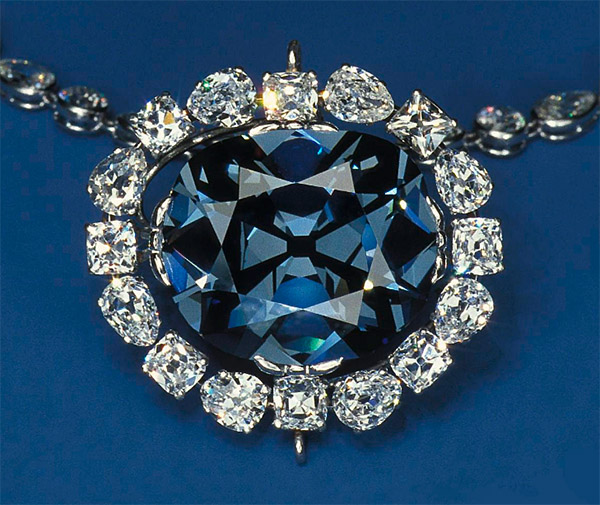
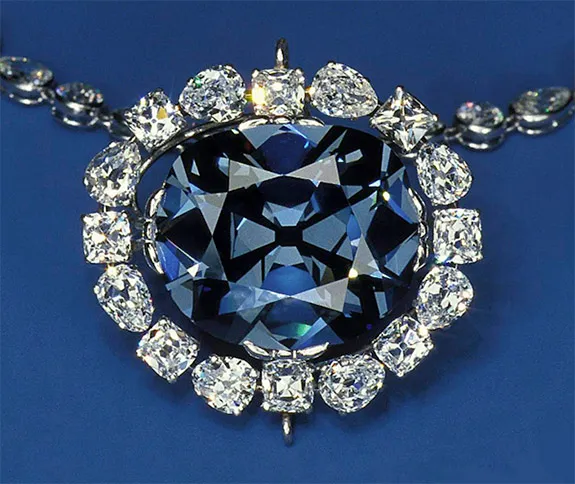
New smoking-gun evidence seems to confirm the theory that the world's most famous diamonds — such as the 45-carat Hope and the 3,106-carat Cullinan — have "super-deep" origins, according to Dr. Evan Smith of the Gemological Institute of America (GIA), who presented his findings to geochemists at the recent Goldschmidt Conference.
Smaller diamonds are known to materialize under high pressure at a relatively shallow depth of 90 to 125 miles amid oxygen-rich rocks. By contrast, the biggest diamonds are likely forming 200 to 500 miles below the surface within patches of oxygen-deprived liquid metal.

While conducting a spectrum analysis of a 20-carat type IIb blue diamond, Dr. Smith and his associate Dr. Wuyi Wang detected the remains of the mineral bridgmanite — a tell-tale sign that the diamond originated deeper in the mantle.

"Finding these remnants of the elusive mineral bridgmanite is significant," Smith said. "It's very common in the deep Earth, at the extreme pressure conditions of the lower mantle, below a depth of 660 km (410 miles). Bridgmanite doesn't exist in the upper mantle, or at the surface."

Smith explained that what they actually identified in the diamond was not bridgmanite, but the minerals left when it broke down down as the pressure decreased.

"Finding these minerals trapped in a diamond means that the diamond itself must have crystallized at a depth where bridgmanite exists, very deep within the Earth," he concluded.

Back in December of 2016, when he was a GIA Postdoctoral Research Fellow, Smith studied the super-deep origins of “offcuts,” or remnants, of large rough diamonds that had been faceted into precious gemstones.

The offcuts offered a window into the workings of the Earth’s deep mantle because their inclusions were teeming with other elements. Typically, these flaws and imperfections are removed during the cutting and polishing process to maximize the beauty and clarity of the diamond. For the researchers at GIA, the neatly preserved inclusions held all the value even though some were no wider than a human hair.

“You really couldn’t ask for a better vessel to store something in,” Smith told NPR at the time. “Diamond is the ultimate Tupperware.”

The GIA had obtained eight fingernail-sized remnants for the study. After grinding them down and analyzing them with microscopes, lasers, electron beams and magnets, Smith and his team concluded that the diamonds contained a solidified mixture of iron, nickel, carbon and sulfur.

Unexpectedly, they also found traces of fluid methane and hydrogen, which led them to conclude that pure carbon crystallized to form diamonds in an oxygen-deprived mix of molten metallic liquid in Earth’s deep mantle.

“Some of the world’s largest and most valuable diamonds exhibit a distinct set of physical characteristics that have led many to regard them as separate from other, more common, diamonds. However, exactly how these diamonds form and what they tell us about the Earth has remained a mystery until now,” Wang explained in 2016.

Despite their origins far below the Earth’s surface, diamonds can blast to the surface during volcanic eruptions. The vertical superhighways that take the diamonds on their journey to the surface are called kimberlite pipes.

Credit: Hope Diamond photo by Chip Clark / Smithsonian.

Categories
A Century of Luxury & Legacy7
  • Previous Article
  • Next Article
Contact Us
Call Us 770.578.0598
Text Us 770.578.0598
Email Us Here

Visit Us
3605 Sandy Plains Road
Marietta, GA 30066

Tues-Fri: 10am - 6pm
Sat: 10am - 4pm
Sun: CLOSED
Mon: CLOSED

Quick Links
  • My Account
  • Returns
  • Our Services
  • Lifetime Warranty
  • Diamond Upgrade
  • Flexible Financing
  • David Douglas Rewards
Our Services
  • Jewelry Repair
  • Custom Jewelry
  • Sell Your Jewelry
  • Jewelry Appraisals
  • Ear Piercing
  • Permanent Jewelry
Shop Jewelry
  • All Jewelry
  • Rings
  • Earrings
  • Necklaces
  • Bracelets
  • Watches
About Us
  • Our Story
  • Responsible Sourcing
  • In Our Community
  • Our Designers
  • Client Stories
Follow Us
SITE MAP PRIVACY & SECURITY Lifetime Warranty RETURN POLICY

© 2026 David Douglas Diamonds & Jewelry. All Rights Reserved. Website designed, maintained, and hosted by Punchmark

  • Return Policy
  • Privacy Policy
  • Terms & Conditions
  • Accessibility Statement

© 2026 David Douglas Diamonds & Jewelry. All Rights Reserved.

Powered by: Punchmark

My Bag
Shopping cart contents
Loading

Learn how we use cookies in our Privacy Policy or manage cookie preferences.