
How Hard Times Shape a Legacy
Week 14 – A Century of Legacy & Luxury – 5/5/2026
There are some seasons in history that just make you pause.
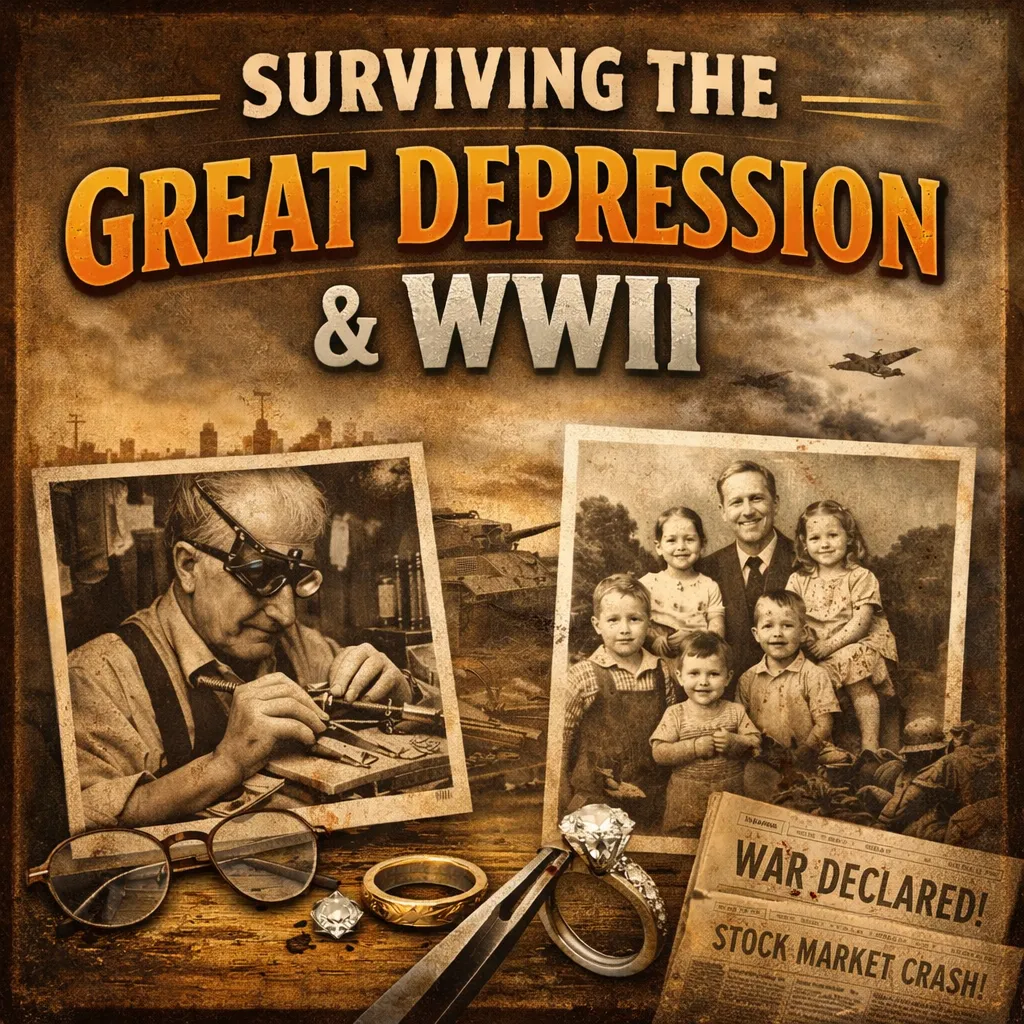
Lately, I’ve found myself spending time in the 1930s and 1940s… not physically, of course, but in thought. As I look back on those decades, the Great Depression, World War II, I can’t help but wonder how my grandfather made it through.
He was only 26 years old in 1930.
That was the same time he and my grandmother started their family. Over the next seven years, they would have four children. At the same time, the world around them was unraveling. Jobs were disappearing. Uncertainty was everywhere. And here he was, trying to build both a family and a business.
I try to put myself in his shoes… and honestly, it’s hard to imagine.
When Times Get Tough, People Repair
My grandfather started out as a diamond setter and manufacturer. That was his craft. That was his focus.
But when the Great Depression hit, everything changed.
People weren’t buying jewelry.
They were selling it… or holding onto what little they had. And if they were doing anything at all, they were repairing it.
Somewhere in that season, my grandfather adapted.
He didn’t stop being a craftsman, but he shifted his focus. He spent more time at the bench doing repair work, reworking pieces, repurposing jewelry, doing whatever needed to be done to serve the people in front of him.
My dad would later tell me something that has proven true over and over again:
When times are tough, the repair business is strong.
When times are good, retail sales are strong.
That’s not just theory… that’s lived experience passed down through generations.
Family, Work, and the In-Between Moments
As I think about those years, I don’t just think about business. I think about family.
My uncle Gene, who would later become my dad’s business partner, was born in 1930. I remember him as a talented stone setter who loved working in platinum, always at the bench, focused and steady.
Then in 1931, my dad was born, actually both my mom and dad were born in 1931.
My aunt Phyllis, born in 1934, is still with us today in her 90s. She was one of those fun aunts who made time for memories, trips, laughter, experiences you don’t forget.
And my uncle Art, born in 1937 and named after my grandfather, lived a life that blended service and entrepreneurship. He was a fireman in Florida and also ran a jewelry store on a schedule that revolved around his shifts. As a kid, I remember visiting him, snorkeling, diving, and just enjoying life.
These weren’t just hard years… they were full years.
A World Full of Uncertainty
The 1930s and 40s weren’t just difficult, they were unpredictable.
In 1938, the War of the Worlds radio broadcast aired by Orson Welles caused panic across the country. People believed it was real. Looking back, it’s easy to wonder how that happened, but when radio is your primary source of information and communication is limited, it makes more sense.
In some ways, it reminds me of today.
We have more information than ever before… but sometimes it’s harder than ever to know what’s true.
Then came World War II. After years of trying to stay out of it, the United States entered the war in 1941 following the Attack on Pearl Harbor.
For nearly two decades, people lived through a combination of economic hardship and global conflict.
And yet… life went on.
When the Industry Changed Forever
During this time, the jewelry industry was struggling too.
There wasn’t a strong demand for diamonds. They weren’t yet a cultural expectation for engagements. That shift hadn’t happened.
But that changed in 1947.
De Beers, which controlled a significant portion of the world’s diamond supply, partnered with an advertising agency. And a copywriter named Frances Gerety wrote four simple words:
“A diamond is forever.”
Those words changed everything.
They connected diamonds to love, commitment, and marriage. They reshaped culture. They influenced generations. And they helped transform diamonds into what they are today.
It’s a powerful reminder of the role storytelling and marketing can play, not just in business, but in shaping how people see the world.
The Thread That Carries Through
When I step back and look at all of this, the depression, the war, the shifts in the industry, I come back to one simple thought:
I’m grateful.
Grateful that my grandfather made it through.
Grateful that he adapted.
Grateful that he didn’t quit when things got hard.
Because if he hadn’t… we wouldn’t be here today.
I’ve experienced my own seasons of change. Some chosen. Some forced. Some that felt uncertain, even overwhelming.
But history has a way of reminding us:
We’re not the first to face hard times.
And we won’t be the last.
The question isn’t whether challenges will come.
The question is how we respond when they do.
Looking Ahead
Next week, I’ll be heading to Detroit to visit the Metropolitan Building, the very place where my grandfather had his office.
Ninth floor. Room five.
That building has since been restored into a beautiful hotel, and I’ve booked that exact room. I’m not sure where I’ll record from yet, but somewhere in that space, I’ll continue this journey.
There’s something meaningful about going back to where it all began.
Thanks for being part of this journey with me.
Doug
Week 14 – A Century of Legacy & Luxury – 5/5/2026
There are some seasons in history that just make you pause.
Lately, I’ve found myself spending time in the 1930s and 1940s… not physically, of course, but in thought. As I look back on those decades, the Great Depression, World War II, I can’t help but wonder how my grandfather made it through.
He was only 26 years old in 1930.
That was the same time he and my grandmother started their family. Over the next seven years, they would have four children. At the same time, the world around them was unraveling. Jobs were disappearing. Uncertainty was everywhere. And here he was, trying to build both a family and a business.
I try to put myself in his shoes… and honestly, it’s hard to imagine.
When Times Get Tough, People Repair
My grandfather started out as a diamond setter and manufacturer. That was his craft. That was his focus.
But when the Great Depression hit, everything changed.
People weren’t buying jewelry.
They were selling it… or holding onto what little they had. And if they were doing anything at all, they were repairing it.
Somewhere in that season, my grandfather adapted.
He didn’t stop being a craftsman, but he shifted his focus. He spent more time at the bench doing repair work, reworking pieces, repurposing jewelry, doing whatever needed to be done to serve the people in front of him.
My dad would later tell me something that has proven true over and over again:
When times are tough, the repair business is strong.
When times are good, retail sales are strong.
That’s not just theory… that’s lived experience passed down through generations.
Family, Work, and the In-Between Moments
As I think about those years, I don’t just think about business. I think about family.
My uncle Gene, who would later become my dad’s business partner, was born in 1930. I remember him as a talented stone setter who loved working in platinum, always at the bench, focused and steady.
Then in 1931, my dad was born, actually both my mom and dad were born in 1931.
My aunt Phyllis, born in 1934, is still with us today in her 90s. She was one of those fun aunts who made time for memories, trips, laughter, experiences you don’t forget.
And my uncle Art, born in 1937 and named after my grandfather, lived a life that blended service and entrepreneurship. He was a fireman in Florida and also ran a jewelry store on a schedule that revolved around his shifts. As a kid, I remember visiting him, snorkeling, diving, and just enjoying life.
These weren’t just hard years… they were full years.
A World Full of Uncertainty
The 1930s and 40s weren’t just difficult, they were unpredictable.
In 1938, the War of the Worlds radio broadcast aired by Orson Welles caused panic across the country. People believed it was real. Looking back, it’s easy to wonder how that happened, but when radio is your primary source of information and communication is limited, it makes more sense.
In some ways, it reminds me of today.
We have more information than ever before… but sometimes it’s harder than ever to know what’s true.
Then came World War II. After years of trying to stay out of it, the United States entered the war in 1941 following the Attack on Pearl Harbor.
For nearly two decades, people lived through a combination of economic hardship and global conflict.
And yet… life went on.
When the Industry Changed Forever
During this time, the jewelry industry was struggling too.
There wasn’t a strong demand for diamonds. They weren’t yet a cultural expectation for engagements. That shift hadn’t happened.
But that changed in 1947.
De Beers, which controlled a significant portion of the world’s diamond supply, partnered with an advertising agency. And a copywriter named Frances Gerety wrote four simple words:
“A diamond is forever.”
Those words changed everything.
They connected diamonds to love, commitment, and marriage. They reshaped culture. They influenced generations. And they helped transform diamonds into what they are today.
It’s a powerful reminder of the role storytelling and marketing can play, not just in business, but in shaping how people see the world.
The Thread That Carries Through
When I step back and look at all of this, the depression, the war, the shifts in the industry, I come back to one simple thought:
I’m grateful.
Grateful that my grandfather made it through.
Grateful that he adapted.
Grateful that he didn’t quit when things got hard.
Because if he hadn’t… we wouldn’t be here today.
I’ve experienced my own seasons of change. Some chosen. Some forced. Some that felt uncertain, even overwhelming.
But history has a way of reminding us:
We’re not the first to face hard times.
And we won’t be the last.
The question isn’t whether challenges will come.
The question is how we respond when they do.
Looking Ahead
Next week, I’ll be heading to Detroit to visit the Metropolitan Building, the very place where my grandfather had his office.
Ninth floor. Room five.
That building has since been restored into a beautiful hotel, and I’ve booked that exact room. I’m not sure where I’ll record from yet, but somewhere in that space, I’ll continue this journey.
There’s something meaningful about going back to where it all began.
Thanks for being part of this journey with me.
Doug