
Skip to main contentSkip to footer
  • (770) 578-0598
  • Visit Our Showroom
  • Contact Us
  • Toggle Toolbar Search Menu
  • Toggle My Account Menu
    Login
    Forgot Password?

    Don’t have an account? Sign up now

  • Toggle My Wish List
  • Toggle Search Menu
  • Toggle My Wishlist
  • Toggle Shopping Cart Menu
testing meta info
  • Engagement
    Engagement Rings
    Customizable Engagement RingsSemi-Set Engagement Rings
    Pre-set Engagement Rings
    Diamond Engagement RingsLab Diamond Engagement RingsShop all Pre-Set Engagement Rings
    Shop By Style
    SolitaireClassicUnique HaloThree StoneVintage
    Shop By Shape
    RoundOvalEmeraldPearCushionMarquise
    Featured
    Hidden Halo Engagement RingsGabriel & Co
    Education
    Engagement Ring BenefitsJewelry FinancingLifetime WarrantyDesign Concierge
    Browse All Engagement
  • Wedding
    Women
    Classic BandsModern BandsAnniversary BandsCurved BandsLuxe Bands
    Men
    Classic BandsModern Metal BandsMixed Metal BandsPattern BandsStones & Inlays
    Men's By Metal
    PlatinumYellow GoldWhite GoldRose Gold
    Modern Metals
    Damascus SteelMeteoriteTantalumZirconium
    Designers
    Chris Ploof DesignsAmmara StoneHeavy Stone Rings
    Wedding Day Jewelry
    Diamond StudsDiamond PendantsTennis Bracelets
    Build Your Wedding Band
    Menu image
  • Diamonds
    Natural Diamonds
    RoundPrincessEmeraldAsscherRadiantCushionOvalPearMarquiseHeart
    Canadamark Diamonds
    Specialty Diamonds
    Lab-Grown Diamonds
    Search Lab Diamonds8x Lab DiamondsSustainably Rated Lab Diamonds
    Featured
    Salt & Pepper DiamondsPre-Set Engagement Rings
    Education
    Diamond FinancingLifetime Diamond UpgradeAbout Lab Grown Diamonds
    Shop Loose Diamonds
  • Custom
    DESIGN YOUR OWN
    Custom Design JewelryWhat to ExpectClient Stories
    CUSTOM JEWELRY
    Custom Design GalleryAward Winning DesignsOur DesignersOur Process
    ONE OF A KIND
    Handmade JewelryHand Engraved JewelryVisit Us In Marietta
    Menu image
  • Jewelry
    SEARCH JEWELRY
    RingsEarringsNecklacesBraceletsWatchesShop All Jewelry
    SHOP BY STYLE
    Diamond Stud EarringsCocktail RingsTennis BraceletsHoop EarringsMen’s JewelryEstate Jewelry
    SERVICES
    Jewelry RepairCustom JewelrySell Your JewelryAppraisalsEar PiercingView All Services
    FEATURED
    Gabriel & Co. FashionShinola WatchesHandmade JewelryreDesign Your RingDavid Douglas Rewards
    Menu image
  • About
    ABOUT US
    Our StoryResponsible SourcingIn Our CommunityAward Winning
    SERVICES
    Jewelry RepairCustom JewelrySell Your JewelryAppraisalsEar PiercingView All Services
    STAY CONNECTED
    Contact UsDavid Douglas Blog
    STAY SOCIAL
    InstagramFacebook
    QUICK LINKS
    Return PolicyEngagement Ring BenefitsLifetime WarrantyJewelry FinancingDavid Douglas Rewards
    Menu image
  • (770) 578-0598
  • Visit Our Showroom
  • Contact Us
  • Toggle Toolbar Search Menu
  • Toggle My Account Menu
    Login
    Forgot Password?

    Don’t have an account? Sign up now

  • Toggle My Wish List
testing meta info
Log In My Cart
  1. Home
  2. Blog
  3. Microbes in Soil Can Signal Diamond-Bearing Kimberlite Far Below the Surface

Microbes in Soil Can Signal Diamond-Bearing Kimberlite Far Below the Surface

Published: Nov 7, 2023
Microbes in Soil Can Signal Diamond-Bearing Kimberlite Far Below the Surface
Author: 
Howard Cohen

Researchers at the University of British Columbia (UBC) have demonstrated how "biological fingerprints" in the soil can signal the presence of diamond-bearing kimberlite ore tens of meters below the surface.

The DNA sequencing of microbes represents a new tool for mineral exploration — a tool that's much less invasive than drilling for samples.

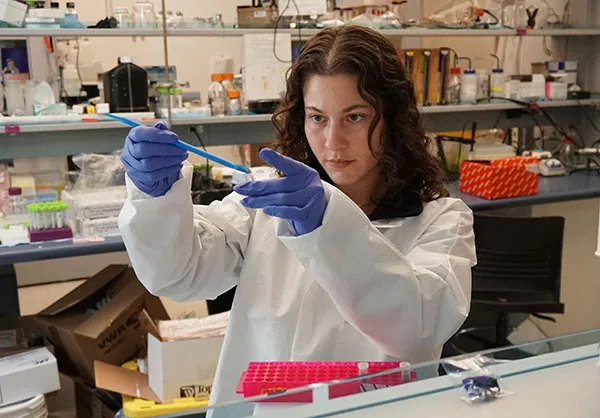
"Drilling is costly, it's time-consuming, and so you want to really know [what's there] before you start poking holes in the ground," Bianca Iulianella Phillips, a doctoral candidate at UBC’s department of earth, ocean and atmospheric sciences (EOAS) told CTV News.

Currently, prospectors employ a limited number of tools to locate buried ore, including drilling samples, scanning terrain and analyzing elements in the overlying rock.
“[The DNA] technique was born from a necessity to see through the Earth with greater sensitivity and resolution," said Iulianella Phillips, "and it has the potential to be used where other techniques aren’t working.”

According to the researchers, when ore interacts with soil, it alters the communities of microbes in the soil, layer by layer, right up to the surface. The researchers tested this in the lab, introducing kimberlite to soil microbes and monitored how they changed in number and species.

“We took those changed communities of microbes as indicators for the presence of ore materials, or biological fingerprints in the soil of buried mineral deposits,” said Iulianella Phillips.
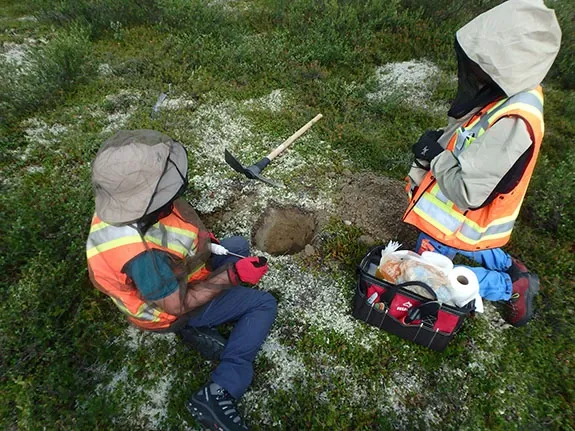
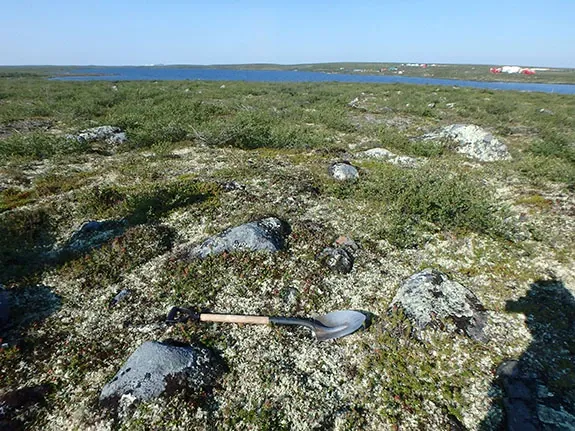
Using these "indicator" microbes and their DNA sequences, the team tested the surface soil at an exploration site in the Northwest Territories where kimberlite had previously been confirmed through drilling. They found 59 of the 65 indicators were present in the soil, with 19 present in high numbers directly above the buried ore. They also identified new indicator microbes to add to their set.

What's more, they tested the surface soil at a second site in the Northwest Territories where they suspected kimberlite was present, and precisely outlined the location of kimberlite buried tens of meters beneath the surface.

This result verified that indicators from one site could predict the location of kimberlite at another.

In the future, exploration teams might use a database of indicator species to test an unknown site to find out if kimberlite deposits are buried beneath the soil.

The researchers also noted that similar DNA sequencing could be used to identify deposits of copper and other valuable materials.

“Microbes are better geochemists than us, and there are thousands of them,” said lead author Dr. Rachel Simister, who conducted the work as a postdoctoral researcher in the UBC department of microbiology and immunology (M&I). “You might run out of elements to sample, but you’ll never run out of microbes.”

The research was published recently in the journal Nature Communications Earth and Environment.

Credits: Photo of UBC doctoral student Bianca Iulianella Phillips by Alex Walls. Photo of sub-arctic tundra at a kimberlite site in the Northwest Territories by Bianca Iulianella Phillips. Photo of UBC researchers collecting soil samples at a Northwest Territories mine by Crowe Lab.

Categories
Doug's Cool ThingsDavid Douglas Diamonds3
  • Previous Article
  • Next Article
Contact Us
Call Us 770.578.0598
Text Us 770.578.0598
Email Us Here

Visit Us
3605 Sandy Plains Road
Marietta, GA 30066

Tues-Fri: 10am - 6pm
Sat: 10am - 4pm
Sun: CLOSED
Mon: CLOSED

Quick Links
  • My Account
  • Returns
  • Our Services
  • Lifetime Warranty
  • Diamond Upgrade
  • Flexible Financing
  • David Douglas Rewards
Our Services
  • Jewelry Repair
  • Custom Jewelry
  • Sell Your Jewelry
  • Jewelry Appraisals
  • Ear Piercing
  • Permanent Jewelry
Shop Jewelry
  • All Jewelry
  • Rings
  • Earrings
  • Necklaces
  • Bracelets
  • Watches
About Us
  • Our Story
  • Responsible Sourcing
  • In Our Community
  • Our Designers
  • Client Stories
Follow Us
SITE MAP PRIVACY & SECURITY Lifetime Warranty RETURN POLICY

© 2025 David Douglas Diamonds & Jewelry. All Rights Reserved. Website designed, maintained, and hosted by Punchmark

  • Return Policy
  • Privacy Policy
  • Terms & Conditions
  • Accessibility Statement

© 2026 David Douglas Diamonds & Jewelry. All Rights Reserved.

Powered by: Punchmark

My Bag
Shopping cart contents
Loading

Learn how we use cookies in our Privacy Policy or manage cookie preferences.