
A Century of Luxury & Legacy
From Mine to Market: Changing Lives Through Diamonds
Published: Mar 29, 2026
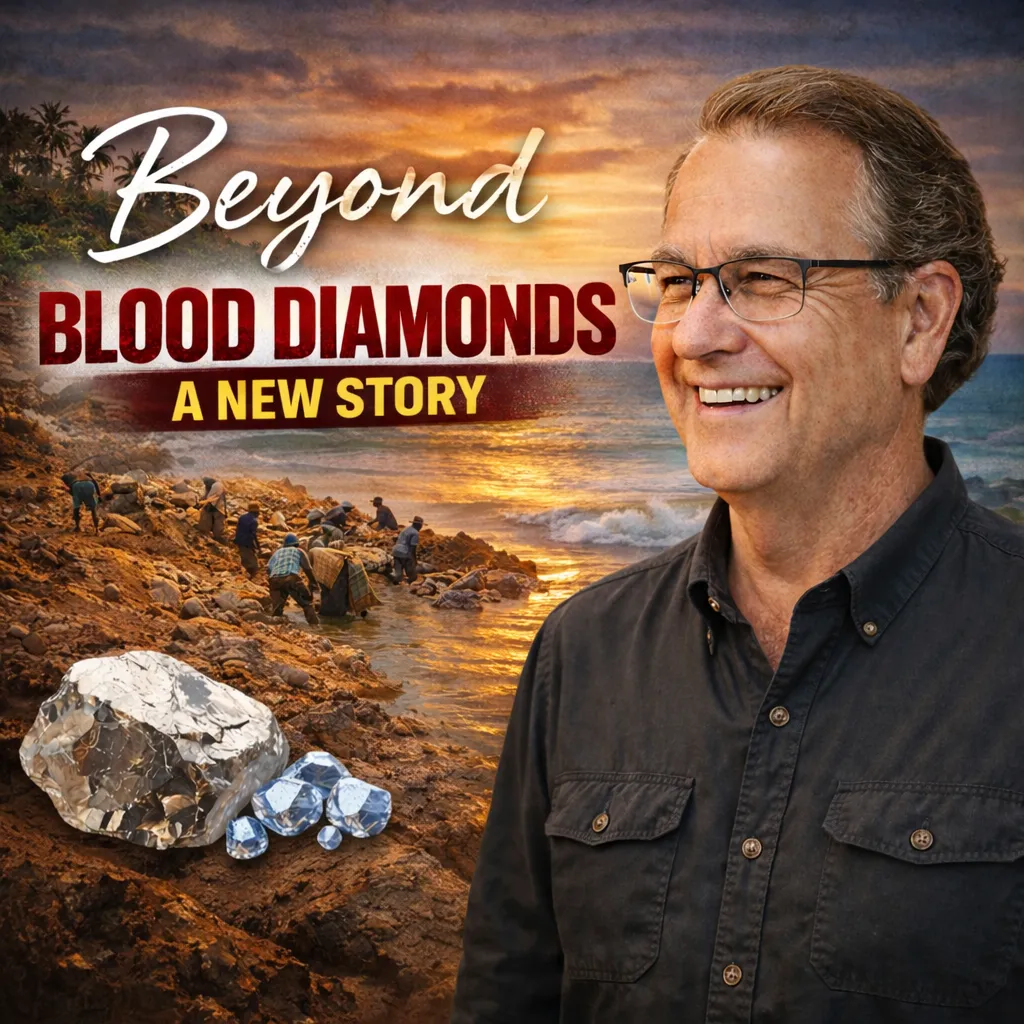
Beyond Blood Diamonds: A New Story Emerging
There are moments in life where you realize you’re standing in a place your past never imagined.
This week was one of those moments for me.
As I stood on the coast of Sierra Leone, looking out over the ocean and reflecting on the journey behind me, I couldn’t help but think about my grandfather. Back in 1926, when he first stepped into the jewelry industry, I’m pretty sure Sierra Leone wasn’t even on his radar. In fact, he may have never even heard of it.
And yet here I am, almost a hundred years later, because of the path he started.
That’s the beauty of legacy. It takes you places you never planned to go.
A Different Perspective on a Familiar Story
For many people, Sierra Leone is still defined by the story told in the movie Blood Diamond.
And to be clear, that history is real. There was a time of deep pain, conflict, and injustice tied to this region and the diamond trade. The industry itself became entangled in something it never intended to be a part of.
But being here in person… seeing it with my own eyes… talking with the people…
I can tell you this:
It’s a new day.
If anything, I’d say we’re moving beyond blood diamonds.
Seeing the Journey from Mine to Market
Over the past week, I had the opportunity to experience the diamond journey in a way I never have before.
We visited gold fields where miners were panning by hand.
We stood in diamond fields and watched the process unfold right in front of us.
We sat down with local brokers who trade in rough diamonds and talked openly about the challenges they face.
And then we spent time with De Beers.
What stood out to me wasn’t just the scale, it was the structure. The intentionality.
We learned how miners must be registered. How their diamonds are verified and tested. How systems are in place to ensure that what enters the market is clean, documented, and accountable.
From there, we visited a mining site supported by their program, where miners are not only trained in how to extract diamonds, but also how to restore the land afterward, returning it to farmland.
That part stuck with me.
It wasn’t just about taking from the earth. It was about giving something back.
A Global Table of Perspectives
One of the most impactful parts of this trip wasn’t just what we saw, it was who we saw it with.
This wasn’t a small, isolated group.
We had delegates from all over the world, Russia, India, the United States.
We had diamond cutters, manufacturers, distributors, designers.
We had media, including the BBC.
We even had representation connected to the U.S. government.
One gentleman especially stood out to me. A Vietnam War veteran who used his GI Bill to learn how to cut diamonds and today is a highly respected cutter. He splits his time between Sierra Leone and Arizona, carrying a vision that I think a lot of us on this trip began to share:
A true mine-to-market journey.
Not just moving diamonds but transforming lives along the way.
The Role of Accountability
Today, much of the industry relies on the Kimberley Process Certification Scheme.
It came out of the very conflict that once defined this region. Its purpose is to track diamonds from their origin and ensure they are conflict-free.
That’s important. It matters.
But as I sat with this group over breakfast one morning, we started asking a bigger question:
What if we could go further?
Dreaming Beyond the Process
One of the realities we talked about is something that happens all over the world, not just here.
Resources are often taken out of a country… but very little value stays behind.
So we began to dream.
What if we could help create a cutting school right here in Sierra Leone?
What if local workers could be trained to cut diamonds, not just mine them?
What if more of the value stayed in the community?
What if proceeds helped fund education for children and families in these mining areas?
It’s a big idea.
An ambitious one.
But it’s also one that feels closer than ever before.
With today’s technology, cell phones, connectivity, even tools like satellite internet, the gap between vision and reality is shrinking.
A New Appreciation
If there’s one thing I’m taking away from this trip, it’s this:
I have a whole new appreciation for what it takes to bring a diamond to market.
Not just the physical journey… but the human one.
The hands that mine it.
The systems that protect it.
The people working to make it right.
And the responsibility we carry on the other end, to tell that story honestly.
Looking Ahead
As I prepare to head home, I find myself with more questions than answers.
But sometimes, that’s exactly where growth begins.
I don’t know exactly where this “mine-to-market” vision will lead.
But I do know this,
We’re closer than we’ve ever been.
And maybe… just maybe… this next chapter of the diamond story will be one we can all be proud of.
Thank you for being part of this journey with me.
Doug Meadows
Founder, Visionary & Hero Maker
David Douglas Diamonds & Jewelry
There are moments in life where you realize you’re standing in a place your past never imagined.
This week was one of those moments for me.
As I stood on the coast of Sierra Leone, looking out over the ocean and reflecting on the journey behind me, I couldn’t help but think about my grandfather. Back in 1926, when he first stepped into the jewelry industry, I’m pretty sure Sierra Leone wasn’t even on his radar. In fact, he may have never even heard of it.
And yet here I am, almost a hundred years later, because of the path he started.
That’s the beauty of legacy. It takes you places you never planned to go.
A Different Perspective on a Familiar Story
For many people, Sierra Leone is still defined by the story told in the movie Blood Diamond.
And to be clear, that history is real. There was a time of deep pain, conflict, and injustice tied to this region and the diamond trade. The industry itself became entangled in something it never intended to be a part of.
But being here in person… seeing it with my own eyes… talking with the people…
I can tell you this:
It’s a new day.
If anything, I’d say we’re moving beyond blood diamonds.
Seeing the Journey from Mine to Market
Over the past week, I had the opportunity to experience the diamond journey in a way I never have before.
We visited gold fields where miners were panning by hand.
We stood in diamond fields and watched the process unfold right in front of us.
We sat down with local brokers who trade in rough diamonds and talked openly about the challenges they face.
And then we spent time with De Beers.
What stood out to me wasn’t just the scale, it was the structure. The intentionality.
We learned how miners must be registered. How their diamonds are verified and tested. How systems are in place to ensure that what enters the market is clean, documented, and accountable.
From there, we visited a mining site supported by their program, where miners are not only trained in how to extract diamonds, but also how to restore the land afterward, returning it to farmland.
That part stuck with me.
It wasn’t just about taking from the earth. It was about giving something back.
A Global Table of Perspectives
One of the most impactful parts of this trip wasn’t just what we saw, it was who we saw it with.
This wasn’t a small, isolated group.
We had delegates from all over the world, Russia, India, the United States.
We had diamond cutters, manufacturers, distributors, designers.
We had media, including the BBC.
We even had representation connected to the U.S. government.
One gentleman especially stood out to me. A Vietnam War veteran who used his GI Bill to learn how to cut diamonds and today is a highly respected cutter. He splits his time between Sierra Leone and Arizona, carrying a vision that I think a lot of us on this trip began to share:
A true mine-to-market journey.
Not just moving diamonds but transforming lives along the way.
The Role of Accountability
Today, much of the industry relies on the Kimberley Process Certification Scheme.
It came out of the very conflict that once defined this region. Its purpose is to track diamonds from their origin and ensure they are conflict-free.
That’s important. It matters.
But as I sat with this group over breakfast one morning, we started asking a bigger question:
What if we could go further?
Dreaming Beyond the Process
One of the realities we talked about is something that happens all over the world, not just here.
Resources are often taken out of a country… but very little value stays behind.
So we began to dream.
What if we could help create a cutting school right here in Sierra Leone?
What if local workers could be trained to cut diamonds, not just mine them?
What if more of the value stayed in the community?
What if proceeds helped fund education for children and families in these mining areas?
It’s a big idea.
An ambitious one.
But it’s also one that feels closer than ever before.
With today’s technology, cell phones, connectivity, even tools like satellite internet, the gap between vision and reality is shrinking.
A New Appreciation
If there’s one thing I’m taking away from this trip, it’s this:
I have a whole new appreciation for what it takes to bring a diamond to market.
Not just the physical journey… but the human one.
The hands that mine it.
The systems that protect it.
The people working to make it right.
And the responsibility we carry on the other end, to tell that story honestly.
Looking Ahead
As I prepare to head home, I find myself with more questions than answers.
But sometimes, that’s exactly where growth begins.
I don’t know exactly where this “mine-to-market” vision will lead.
But I do know this,
We’re closer than we’ve ever been.
And maybe… just maybe… this next chapter of the diamond story will be one we can all be proud of.
Thank you for being part of this journey with me.
Doug Meadows
Founder, Visionary & Hero Maker
David Douglas Diamonds & Jewelry