
Skip to main contentSkip to footer
  • (770) 578-0598
  • Visit Our Showroom
  • Contact Us
  • Toggle Toolbar Search Menu
  • Toggle My Account Menu
    Login
    Forgot Password?

    Don’t have an account? Sign up now

  • Toggle My Wish List
  • Toggle Search Menu
  • Toggle My Wishlist
  • Toggle Shopping Cart Menu
testing meta info
  • Engagement
    Engagement Rings
    Customizable Engagement RingsSemi-Set Engagement Rings
    Pre-set Engagement Rings
    Diamond Engagement RingsLab Diamond Engagement RingsShop all Pre-Set Engagement Rings
    Shop By Style
    SolitaireClassicUnique HaloThree StoneVintage
    Shop By Shape
    RoundOvalEmeraldPearCushionMarquise
    Featured
    Hidden Halo Engagement RingsGabriel & Co
    Education
    Engagement Ring BenefitsJewelry FinancingLifetime WarrantyDesign Concierge
    Browse All Engagement
  • Wedding
    Women
    Classic BandsModern BandsAnniversary BandsCurved BandsLuxe Bands
    Men
    Classic BandsModern Metal BandsMixed Metal BandsPattern BandsStones & Inlays
    Men's By Metal
    PlatinumYellow GoldWhite GoldRose Gold
    Modern Metals
    Damascus SteelMeteoriteTantalumZirconium
    Designers
    Chris Ploof DesignsAmmara StoneHeavy Stone Rings
    Wedding Day Jewelry
    Diamond StudsDiamond PendantsTennis Bracelets
    Build Your Wedding Band
    Menu image
  • Diamonds
    Natural Diamonds
    RoundPrincessEmeraldAsscherRadiantCushionOvalPearMarquiseHeart
    Canadamark Diamonds
    Specialty Diamonds
    Lab-Grown Diamonds
    Search Lab Diamonds8x Lab DiamondsSustainably Rated Lab Diamonds
    Featured
    Salt & Pepper DiamondsPre-Set Engagement Rings
    Education
    Diamond FinancingLifetime Diamond UpgradeAbout Lab Grown Diamonds
    Shop Loose Diamonds
  • Custom
    DESIGN YOUR OWN
    Custom Design JewelryWhat to ExpectClient Stories
    CUSTOM JEWELRY
    Custom Design GalleryAward Winning DesignsOur DesignersOur Process
    ONE OF A KIND
    Handmade JewelryHand Engraved JewelryVisit Us In Marietta
    Menu image
  • Jewelry
    SEARCH JEWELRY
    RingsEarringsNecklacesBraceletsWatchesShop All Jewelry
    SHOP BY STYLE
    Diamond Stud EarringsCocktail RingsTennis BraceletsHoop EarringsMen’s JewelryEstate Jewelry
    SERVICES
    Jewelry RepairCustom JewelrySell Your JewelryAppraisalsEar PiercingView All Services
    FEATURED
    Gabriel & Co. FashionShinola WatchesHandmade JewelryreDesign Your RingDavid Douglas Rewards
    Menu image
  • About
    ABOUT US
    Our StoryResponsible SourcingIn Our CommunityAward Winning
    SERVICES
    Jewelry RepairCustom JewelrySell Your JewelryAppraisalsEar PiercingView All Services
    STAY CONNECTED
    Contact UsDavid Douglas Blog
    STAY SOCIAL
    InstagramFacebook
    QUICK LINKS
    Return PolicyEngagement Ring BenefitsLifetime WarrantyJewelry FinancingDavid Douglas Rewards
    Menu image
  • (770) 578-0598
  • Visit Our Showroom
  • Contact Us
  • Toggle Toolbar Search Menu
  • Toggle My Account Menu
    Login
    Forgot Password?

    Don’t have an account? Sign up now

  • Toggle My Wish List
testing meta info
Log In My Cart
  1. Home
  2. Blog
  3. Diamonds Do Very, Very Well Under Extreme Pressure, Scientists Confirm

Diamonds Do Very, Very Well Under Extreme Pressure, Scientists Confirm

Published: Nov 30
Diamonds Do Very, Very Well Under Extreme Pressure, Scientists Confirm
Author: 
Howard Cohen

American diplomat Henry Kissinger once joked that "a diamond is merely a lump of coal that did well under pressure." Now, scientists at the Lawrence Livermore National Laboratory in California have taken that notion to the extreme.
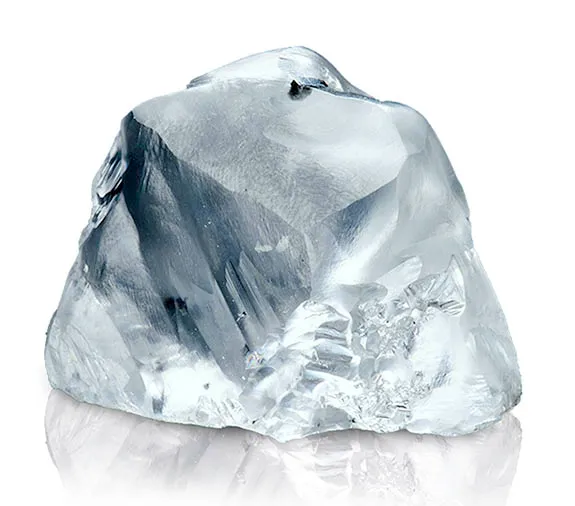
Researchers predicted that a diamond crystal would shift to a new, more stable structure when subjected to 2 trillion pascals of pressure. That's equivalent to five times the pressure found at the center of the Earth.

What they discovered, however, was that the diamond crystal remained perfectly stable. In their terminology, the diamond proved to be "metastable" due to the strong chemical bonds that hold its carbon atoms together.
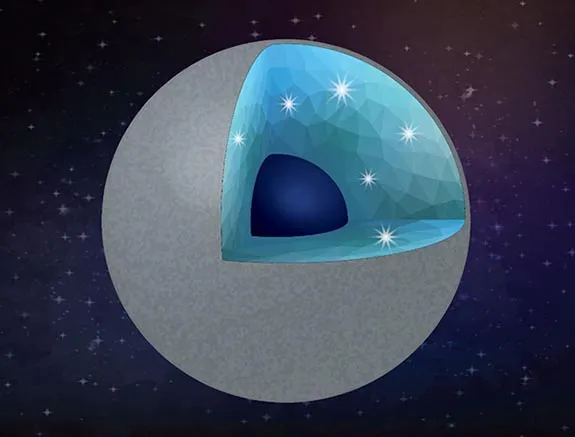
The findings lend credence to the fantastical theory that carbon-rich exoplanets may have diamonds at their core.

During their experiments, physicist Amy Lazicki Jenei and her colleagues modeled high-pressure environments by pummeling the diamond crystal with powerful lasers and then used X-rays to examine the structure.

Scientists had theorized that the carbon-based material would transform again into several new structures, ones we have never seen or achieved before.

"We discovered that, surprisingly, under these conditions carbon does not transform to any of the predicted phases, but retains the diamond structure up to the highest pressure," Jenei said.

What's also super interesting about diamonds is that they form at intense pressures far below the Earth's surface, but retain their structure when relieved of that pressure. Carbon in its most stable state is graphite (the same material you find in a lead pencil). Theoretically, carbon under less pressure would revert to its most stable variant, but it doesn't.

The scientists reported that they are not entirely sure why diamond is metastable across a wide range of pressures and there is much more work ahead.

Jenei and her team published their findings in the January 27 edition of Nature.

In September of 2020, a team of researchers from Arizona State University and the University of Chicago suggested that the key factor in determining whether an exoplanet will be rich in diamonds is the chemical composition of the star that it orbits.

Exoplanets that orbit stars with a high carbon-to-oxygen ratio are more likely to be carbon-rich. Under the right conditions, such as the presence of water, heat and pressure, the highly concentrated carbon at the core of exoplanets could turn into diamonds, they predicted in a study published in The Planetary Science Journal.

While the prospects of finding a diamond planet are exciting, the scientists claim that the same characteristics that might make a planet diamond-rich would also make it uninhabitable. They believe that carbon-rich planets lack geologic activity and, therefore, have atmospheric conditions that would be inhospitable to life. Atmospheres are critical for life as they provide air to breathe, protection from the harsh environment of space and even pressure to allow for liquid water, said the scientists.

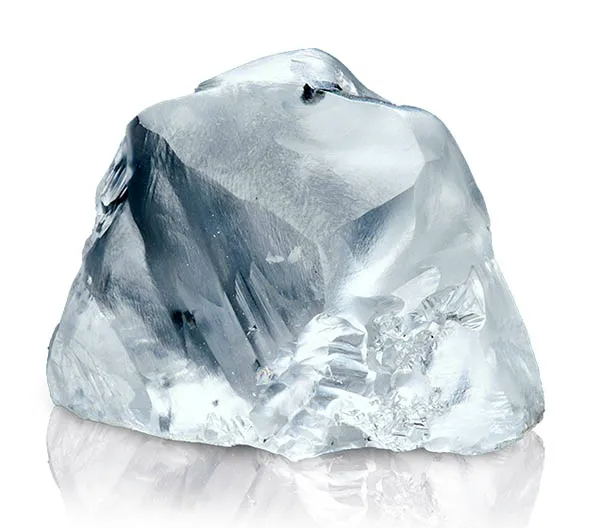
Credits: Image of 341-carat diamond courtesy of Lucara. Diamond planet illustration courtesy of Shim/ASU/Vecteezy.

Categories
Doug's Cool ThingsDavid Douglas Diamonds3
  • Previous Article
  • Next Article
Contact Us
Call Us 770.578.0598
Text Us 770.578.0598
Email Us Here

Visit Us
3605 Sandy Plains Road
Marietta, GA 30066

Tues-Fri: 10am - 6pm
Sat: 10am - 4pm
Sun: CLOSED
Mon: CLOSED

Quick Links
  • My Account
  • Returns
  • Our Services
  • Lifetime Warranty
  • Diamond Upgrade
  • Flexible Financing
  • David Douglas Rewards
Our Services
  • Jewelry Repair
  • Custom Jewelry
  • Sell Your Jewelry
  • Jewelry Appraisals
  • Ear Piercing
  • Permanent Jewelry
Shop Jewelry
  • All Jewelry
  • Rings
  • Earrings
  • Necklaces
  • Bracelets
  • Watches
About Us
  • Our Story
  • Responsible Sourcing
  • In Our Community
  • Our Designers
  • Client Stories
Follow Us
SITE MAP PRIVACY & SECURITY Lifetime Warranty RETURN POLICY

© 2025 David Douglas Diamonds & Jewelry. All Rights Reserved. Website designed, maintained, and hosted by Punchmark

  • Return Policy
  • Privacy Policy
  • Terms & Conditions
  • Accessibility Statement

© 2026 David Douglas Diamonds & Jewelry. All Rights Reserved.

Powered by: Punchmark

My Bag
Shopping cart contents
Loading

Learn how we use cookies in our Privacy Policy or manage cookie preferences.