
A Century of Luxury & Legacy
A Jeweler’s Journey to Sierra Leone’s Diamond Mines
Published: Mar 15, 2026
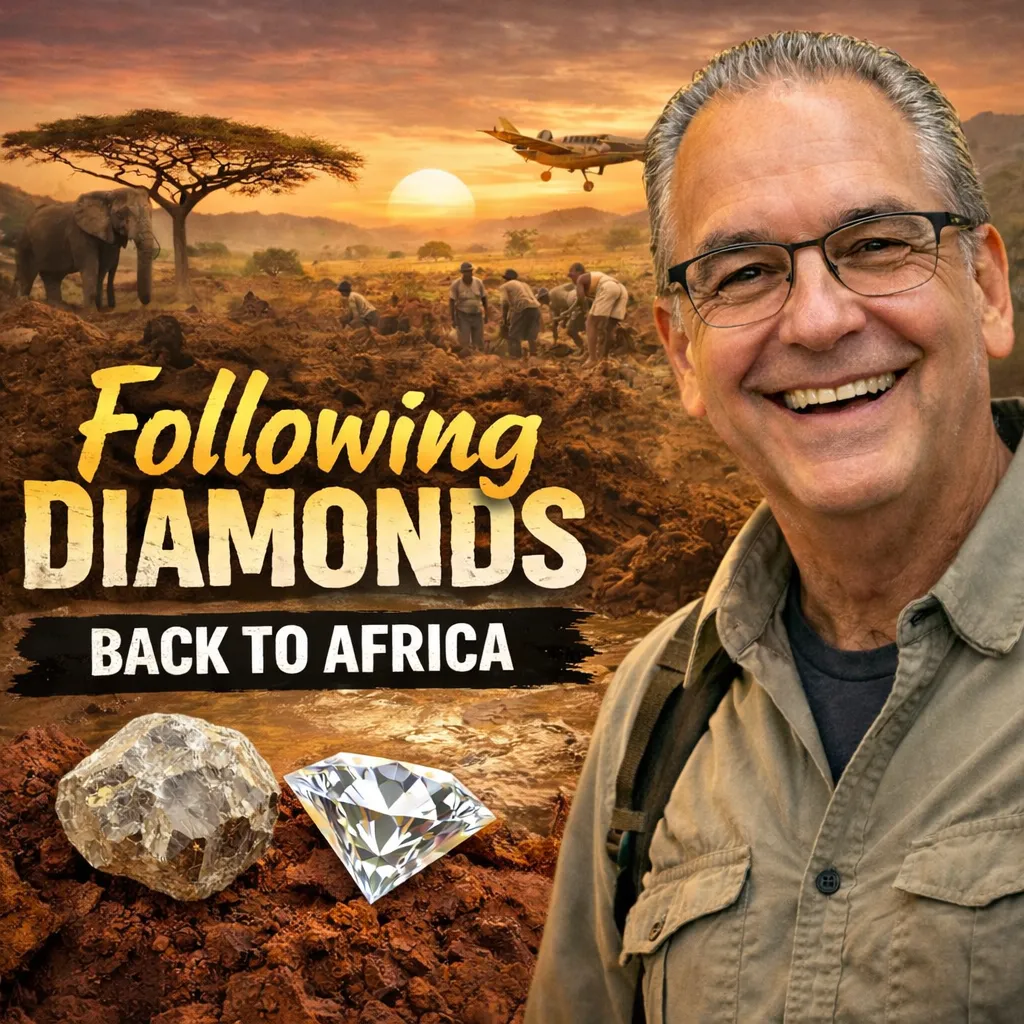
Following the Diamond Trail: My Journey to Africa
Welcome to Week 11 of A Century of Legacy & Luxury. My name is Doug Meadows, founder, visionary, and “hero maker” at David Douglas Diamonds. Each week in this series, I’ve been reflecting on the legacy of my grandfather, who began our family’s jewelry journey back in 1926, and exploring the stories that shaped our industry along the way.
As I’ve been preparing these episodes, I’ve been doing a lot of reading and learning, especially about diamonds. Even after spending my entire life in the jewelry business, I’m constantly amazed by how much there still is to learn. Just when I think I understand everything there is to know about diamonds, I discover something new.
Lately, I’ve been digging deeper into the history of the diamond industry, companies like De Beers, the evolution of diamonds in jewelry, and even how diamonds have been used in industrial applications like drill bits and cutting tools. And of course, today we’re seeing the rise of lab-grown diamonds, which is creating a whole new chapter in the industry.
All of that curiosity has led to something exciting: I’m heading to Africa.
A Journey Back to the Source
The trip begins with a flight from Atlanta to Johannesburg, South Africa. After a long flight and a layover, I’ll continue on to Lusaka, Zambia, a place that has become very special to me over the years.
Several years ago, I traveled through Africa with a friend of mine, Gary Shotton. We called it a business mission trip. Our goal was simple: introduce each other to our contacts and look for ways to encourage entrepreneurship and economic opportunity.
On that trip we visited several countries, Uganda, Kenya, Tanzania, and Zambia. While we were in Zambia, I was asked to teach about jewelry.
Now, Zambia is rich in natural resources. It has large deposits of copper, gold, and gemstones, including emeralds and amethyst. The people I met there asked a simple but powerful question:
How can we add value to the resources we already have?
They didn’t just want gemstones, they wanted to learn how to make jewelry.
So I showed them.
Teaching a Skill That Lasts
I brought some tools with me and left them with the group, including a Foredom flex shaft, which is one of the most important tools a jeweler uses for grinding, polishing, drilling, and shaping metal.
Six months later, they were already working on their own.
Today, almost eight or nine years later, they’re still making jewelry. They create pieces using recycled copper, and over time we’ve even added gold plating to improve the finish and value of their work.
That experience reinforced something I’ve believed for a long time.
There’s an old saying:
Give a man a fish and you feed him for a day. Teach a man to fish and you feed him for a lifetime.
When I travel overseas, I’m often asked for money. And while financial help can sometimes be necessary, it’s not always the best long-term solution. There’s a great book called When Helping Hurts that talks about this idea.
What excites me far more is helping people build sustainable businesses.
Entrepreneurship in Africa
Over the years, I’ve had the privilege of helping start several small business initiatives across Africa.
One story that stands out happened near Victoria Falls, where Zambia borders Zimbabwe & Botswana.
I was there with my daughter in February of 2020. She wanted to go on a safari, and we connected with a wonderful driver during our trip. We had great conversations and stayed in touch afterward.
Then the pandemic hit.
Tourism collapsed almost overnight, and suddenly our driver had no income. When I reached out to check on him, he shared how difficult things had become.
So we asked him a simple question:
What would you like to do?
His answer was clear: he wanted to start a taxi business.
We helped him get started, and now part of this upcoming trip is to visit him again and do some business coaching, helping him refine his services, improve customer experience, and strengthen the profitability of his operation.
Small Businesses Making a Big Difference
There are several other projects I’ll be visiting as well.
In Lusaka, we helped a local pastor start a small chicken farm with about one hundred chickens. The idea was simple: produce eggs that he could take to market and sell, helping support his family and ministry.
We’ll also visit a group of women who were trained in jewelry making. A missionary named Dawn, an American who has been serving in Africa for nearly thirty years, has helped gather women from difficult backgrounds and teach them valuable skills.
Through training and mentorship, many of them now have jobs, income, and hope for the future.
Building a Vocational School in Uganda
Another important stop on this journey will be Uganda, where we’ve been working to build a vocational school.
The goal of the school is to teach practical, life-changing skills such as:
Watching people gain skills that can transform their lives is incredibly rewarding.
Visiting a Diamond Mine in Sierra Leone
The final part of this journey may be the most fascinating for someone in the jewelry industry.
I’ll be traveling to Sierra Leone as part of a delegation representing the diamond industry. The goal is to visit artisanal diamond mines and see firsthand where diamonds come from.
This has been on my bucket list for years.
We’ll be visiting the miners, the diggers themselves, and also meeting with government offices to understand what happens to a diamond once it comes out of the ground.
Where does it go next?
How is it documented?
How does it move through the global diamond pipeline before eventually making its way into a jewelry store like ours?
These are the kinds of questions I’m excited to explore.
The Legacy of Diamonds
Many people remember the movie Blood Diamond, which highlighted some of the tragic conflicts that once surrounded diamond mining in certain parts of the world.
Thankfully, the industry has made enormous progress since then. Systems like the Kimberley Process were created to ensure diamonds are ethically sourced and not used to fund conflict.
Today, the vast majority of diamonds entering the market are carefully tracked to ensure they are conflict-free.
Still, I’m eager to see the process firsthand, from the ground to the marketplace.
What Happens Next
This trip will take me across several countries and introduce me to people from all over the world, diamond dealers, jewelers, industry leaders, and entrepreneurs.
And I have no idea who I’ll meet along the way.
But that’s part of the adventure.
Over the next few weeks, I’ll be sharing new podcast episodes directly from Africa, including stories from Zambia, Uganda, and Sierra Leone.
Who knows, I might even sneak in an extra episode or two while I’m there.
Until next time, stay safe, and thank you for joining me on this journey through A Century of Legacy & Luxury.
Welcome to Week 11 of A Century of Legacy & Luxury. My name is Doug Meadows, founder, visionary, and “hero maker” at David Douglas Diamonds. Each week in this series, I’ve been reflecting on the legacy of my grandfather, who began our family’s jewelry journey back in 1926, and exploring the stories that shaped our industry along the way.
As I’ve been preparing these episodes, I’ve been doing a lot of reading and learning, especially about diamonds. Even after spending my entire life in the jewelry business, I’m constantly amazed by how much there still is to learn. Just when I think I understand everything there is to know about diamonds, I discover something new.
Lately, I’ve been digging deeper into the history of the diamond industry, companies like De Beers, the evolution of diamonds in jewelry, and even how diamonds have been used in industrial applications like drill bits and cutting tools. And of course, today we’re seeing the rise of lab-grown diamonds, which is creating a whole new chapter in the industry.
All of that curiosity has led to something exciting: I’m heading to Africa.
A Journey Back to the Source
The trip begins with a flight from Atlanta to Johannesburg, South Africa. After a long flight and a layover, I’ll continue on to Lusaka, Zambia, a place that has become very special to me over the years.
Several years ago, I traveled through Africa with a friend of mine, Gary Shotton. We called it a business mission trip. Our goal was simple: introduce each other to our contacts and look for ways to encourage entrepreneurship and economic opportunity.
On that trip we visited several countries, Uganda, Kenya, Tanzania, and Zambia. While we were in Zambia, I was asked to teach about jewelry.
Now, Zambia is rich in natural resources. It has large deposits of copper, gold, and gemstones, including emeralds and amethyst. The people I met there asked a simple but powerful question:
How can we add value to the resources we already have?
They didn’t just want gemstones, they wanted to learn how to make jewelry.
So I showed them.
Teaching a Skill That Lasts
I brought some tools with me and left them with the group, including a Foredom flex shaft, which is one of the most important tools a jeweler uses for grinding, polishing, drilling, and shaping metal.
Six months later, they were already working on their own.
Today, almost eight or nine years later, they’re still making jewelry. They create pieces using recycled copper, and over time we’ve even added gold plating to improve the finish and value of their work.
That experience reinforced something I’ve believed for a long time.
There’s an old saying:
Give a man a fish and you feed him for a day. Teach a man to fish and you feed him for a lifetime.
When I travel overseas, I’m often asked for money. And while financial help can sometimes be necessary, it’s not always the best long-term solution. There’s a great book called When Helping Hurts that talks about this idea.
What excites me far more is helping people build sustainable businesses.
Entrepreneurship in Africa
Over the years, I’ve had the privilege of helping start several small business initiatives across Africa.
One story that stands out happened near Victoria Falls, where Zambia borders Zimbabwe & Botswana.
I was there with my daughter in February of 2020. She wanted to go on a safari, and we connected with a wonderful driver during our trip. We had great conversations and stayed in touch afterward.
Then the pandemic hit.
Tourism collapsed almost overnight, and suddenly our driver had no income. When I reached out to check on him, he shared how difficult things had become.
So we asked him a simple question:
What would you like to do?
His answer was clear: he wanted to start a taxi business.
We helped him get started, and now part of this upcoming trip is to visit him again and do some business coaching, helping him refine his services, improve customer experience, and strengthen the profitability of his operation.
Small Businesses Making a Big Difference
There are several other projects I’ll be visiting as well.
In Lusaka, we helped a local pastor start a small chicken farm with about one hundred chickens. The idea was simple: produce eggs that he could take to market and sell, helping support his family and ministry.
We’ll also visit a group of women who were trained in jewelry making. A missionary named Dawn, an American who has been serving in Africa for nearly thirty years, has helped gather women from difficult backgrounds and teach them valuable skills.
Through training and mentorship, many of them now have jobs, income, and hope for the future.
Building a Vocational School in Uganda
Another important stop on this journey will be Uganda, where we’ve been working to build a vocational school.
The goal of the school is to teach practical, life-changing skills such as:
- Sewing and tailoring
- Carpentry
- Welding
- Other trade skills that lead directly to employment
Watching people gain skills that can transform their lives is incredibly rewarding.
Visiting a Diamond Mine in Sierra Leone
The final part of this journey may be the most fascinating for someone in the jewelry industry.
I’ll be traveling to Sierra Leone as part of a delegation representing the diamond industry. The goal is to visit artisanal diamond mines and see firsthand where diamonds come from.
This has been on my bucket list for years.
We’ll be visiting the miners, the diggers themselves, and also meeting with government offices to understand what happens to a diamond once it comes out of the ground.
Where does it go next?
How is it documented?
How does it move through the global diamond pipeline before eventually making its way into a jewelry store like ours?
These are the kinds of questions I’m excited to explore.
The Legacy of Diamonds
Many people remember the movie Blood Diamond, which highlighted some of the tragic conflicts that once surrounded diamond mining in certain parts of the world.
Thankfully, the industry has made enormous progress since then. Systems like the Kimberley Process were created to ensure diamonds are ethically sourced and not used to fund conflict.
Today, the vast majority of diamonds entering the market are carefully tracked to ensure they are conflict-free.
Still, I’m eager to see the process firsthand, from the ground to the marketplace.
What Happens Next
This trip will take me across several countries and introduce me to people from all over the world, diamond dealers, jewelers, industry leaders, and entrepreneurs.
And I have no idea who I’ll meet along the way.
But that’s part of the adventure.
Over the next few weeks, I’ll be sharing new podcast episodes directly from Africa, including stories from Zambia, Uganda, and Sierra Leone.
Who knows, I might even sneak in an extra episode or two while I’m there.
Until next time, stay safe, and thank you for joining me on this journey through A Century of Legacy & Luxury.